
Sunbrella Extract Oil Stain Remover is the top pick for most buyers and the best solvent based upholstery cleaner for oil-based stains on Sunbrella fabric. Its focused formula makes it a practical choice for grease, sunscreen, and food marks on outdoor cushions.
This guide is for people cleaning patio furniture, boat seating, outdoor cushions, and other upholstered surfaces. Fabric compatibility matters most, followed by bottle size and the area one container can cover. Check care labels before applying any solvent, especially on delicate or unfamiliar materials. The seven picks below are ranked with clear reasons and honest drawbacks for each, so you can match the cleaner to the fabric, stain, and cleanup area.
Quick Comparison
| # | Product | Best For | Price | |
|---|---|---|---|---|
| 1 | Sunbrella Extract Oil Stain Remover | Outdoor Fabric Oil Stains | ~$17 | View → |
| 2 | Janie Dry Stick Spot Cleaner | Quick Dry Spot Touchups | ~$13 | View → |
| 3 | P&S Carpet Bomber Upholstery Cleaner | Professional Upholstery Deep Cleaning | ~$32 | View → |
| 4 | P&S Professional Detail Products Carpet Bomber Upholstery Cleaner | Automotive Carpet Pre-Treatment | ~$18 | View → |
| 5 | CarGuys Interior Car Cleaner | Routine Car Interior Cleaning | ~$20 | View → |
| 6 | P&S Terminator Enzyme Spot & Stain Remover | Pet Accident Odor Removal | ~$32 | View → |
| 7 | Starrybot Upholstery Cleaner Machine | Machine-Assisted Upholstery Cleaning | ~$60 | View → |
7 Top Solvent Upholstery Cleaner Picks
This ranked list counts down to the top pick, with each solvent-based cleaner assessed for materials, application, and cleaning performance.
7. Starrybot Upholstery Cleaner Machine

Best for: Quick pet-stain cleanup at home
The Starrybot Upholstery Cleaner is a compact spot extractor for carpets, sofas, car seats, and other fabric surfaces. Its 18,000 Pa suction targets spilled drinks, muddy paw marks, and pet accidents. The white machine weighs 10.4 pounds, so it should be easier to carry between rooms than a full-size carpet cleaner. A detachable handle also helps with storage.
Its tool selection covers different cleanup jobs. The 3-inch hand tool focuses on small, stubborn spots, while the 5-inch tool covers wider messes. An integrated crevice tool reaches narrow gaps around car seats and furniture. The 60-ounce clean-water tank and 40-ounce dirty-water tank reduce constant refills during short jobs. A 6.5-foot hose gives useful reach without moving the machine after every few feet. At around $60, it offers a practical option for routine spot cleaning, though large carpeted areas will take more time. A one-year warranty adds some coverage for ownership concerns.
Pros
- 18,000 Pa suction is suited to lifting pet stains and liquid spills from fabric.
- Three cleaning tools handle small spots, wider areas, and narrow gaps.
- A 6.5-foot hose and 10.4-pound body make room-to-room use easier.
Cons
- The 60-ounce clean tank and 40-ounce dirty tank may require refilling and emptying during bigger jobs.
- It is better suited to spot cleaning than cleaning an entire carpeted home quickly.
6. P&S Terminator Enzyme Spot & Stain Remover
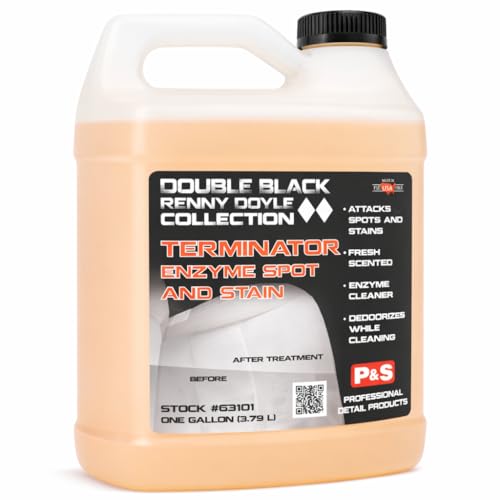
Best for: Detailers cleaning carpeted vehicle interiors
P & S Terminator is a one-gallon enzyme cleaner for carpets, upholstery, fabric seats, and headliners. Its formula targets grease, oil, dirt, food residue, pet stains, and other protein-based messes. Use it as a pre-treatment before shampooing or extraction. Spray the affected area, allow the product to dwell, then remove the loosened soil with your chosen cleaning method.
The enzyme-based formula is the main draw. It helps break down organic residue instead of relying only on heavy scrubbing, which can reduce effort on ground-in spots. It also works as a deodorizer, leaving a fresh scent after cleaning. The gallon size suits regular vehicle detailing, rental-car cleanup, or household carpet work better than occasional spot cleaning. At around $32, it offers a practical amount for users who clean several interiors, though prices change over time.
Pros
- Targets grease, oil, dirt, food spills, and protein-based stains.
- Works on multiple materials, including carpet, upholstery, seats, and headliners.
- One-gallon size supports repeated pre-treatment jobs and larger cleaning projects.
Cons
- The gallon container may be excessive for occasional users or small households.
- It works best before shampooing or extraction, so buyers may need separate equipment and cleaning products for complete stain removal.
5. CarGuys Interior Car Cleaner

Best for: Multi-surface interior spot cleaning
CarGuys Interior Car Cleaner is an 18-ounce, no-rinse spray for common vehicle surfaces. It is designed for leather, fabric upholstery, carpet, vinyl, plastic, rubber, and metal, so one bottle can cover seats, floor mats, trim, and steering wheels. The kit includes one Professional Series microfiber towel. Apply the cleaner to the surface or towel, work it lightly, then wipe away the loosened soil. No water rinse is required.
Its main advantage is broad material coverage in a compact kit. The formula targets embedded dirt, oil, grease, and set-in spills, rather than only fresh dust. CarGuys says it leaves no sticky or greasy film, which matters on dashboards, leather, and touch points. The 18-ounce size should suit several cleaning sessions across multiple vehicles, though coverage depends on soil levels and spray use. At around $20, it costs more than a basic household cleaner, but the included towel adds practical value. This is a cleaner, not a dedicated leather conditioner or protectant.
Pros
- Works on leather, carpet, upholstery, vinyl, plastic, rubber, and metal.
- No-rinse formula saves water and cleanup time.
- Includes a microfiber towel with the 18-ounce bottle.
Cons
- One bottle may run out quickly on heavily soiled interiors or frequent detailing.
- It does not replace a leather conditioner or protectant.
4. P&S Professional Detail Products Carpet Bomber Upholstery Cleaner

Best for: DIY vehicle interior and exterior detailing
Carpet Bomber is a concentrated cleaner for carpets, fabric upholstery, vinyl, engines, and wheel wells. The 16-ounce bottle can be used at full strength for heavy grease and grime, or diluted up to 8:1 with water for lighter jobs. That gives buyers more flexibility than a ready-to-use spray, though measuring the mix takes extra time.
Its citrus-based formula targets embedded dirt, stains, grease, and odor sources instead of only covering them with fragrance. P&S also positions it for household carpets, rugs, and upholstered furniture, so one bottle can handle pet messes and everyday spills beyond the vehicle. The cleaner comes from the Renny Doyle Double Black Collection, a professional detailing line. Around $18, it costs more than some basic household cleaners, but the concentrated formula may stretch across multiple jobs.
Pros
- Works on several surfaces, including upholstery, vinyl, carpets, engines, and wheel wells.
- Dilutes up to 8:1, allowing one 16-ounce bottle to cover lighter cleaning tasks.
- Citrus-based formula addresses embedded odors while cleaning dirt and grease.
Cons
- A 16-ounce bottle is relatively small for frequent full-strength detailing, especially on large interiors.
- The citrus scent may not suit buyers who prefer fragrance-free cleaners, and delicate fabrics should be spot-tested first.
3. P&S Carpet Bomber Upholstery Cleaner

Best for: Vehicle owners cleaning fabric interiors
P&S Carpet Bomber is a concentrated upholstery and carpet cleaner sold in a 1-gallon container. Its citrus-based formula targets embedded dirt, grease, grime, and odors on fabric, vinyl, carpets, rugs, and upholstered furniture. It can also handle engines and wheel wells, giving detailers one cleaner for several jobs. At around $32, the large container suits regular vehicle care or household cleanup.
The strongest feature is its dilution range. Use it full-strength for heavy soil, or mix it with water at up to 8:1 for lighter cleaning. That flexibility can stretch one gallon across many applications, although the right mix depends on the surface and mess. The cleaner is designed to remove odor sources rather than simply cover them with fragrance. Its citrus scent may appeal to some users, but people who prefer unscented products may find it noticeable. P&S places it in the Renny Doyle Double Black Collection, a professional-focused line with more than 50 years of company experience behind it.
Pros
- One formula works on upholstery, carpets, vinyl, engines, and wheel wells.
- Up to an 8:1 dilution ratio helps reduce product use for light cleaning.
- Citrus-based cleaning targets grease, dirt, and odor-causing buildup.
Cons
- A 1-gallon container takes more storage space than a ready-to-use spray.
- Users must measure dilution ratios and should check material compatibility first.
2. Janie Dry Stick Spot Cleaner

Best for: quick upholstery spot cleanup
The Janie Dry Stick Spot Cleaner is a 1.8-ounce powdered stain remover for sofas, chairs, and other upholstered furniture. It works without water or a washing machine. Rub the stick over the mark, let the powder absorb the mess, then brush away the residue. That makes it useful for small spills at home, in an office, or during travel. At around $13, it costs less than many larger upholstery-cleaning products, though the compact size also limits how many stains it can handle.
Its formula uses natural ingredients and clays instead of harsh chemicals or solvents. The product targets common oil, grease, and food stains, and it is designed for most upholstery colors without leaving a visible ring. It is also odorless, non-toxic, and non-flammable, which may suit homes with children or pets. Still, “most fabrics” does not mean every fabric. The maker specifically advises against cashmere and other delicate materials. Test a hidden area first, since fabric finishes and dyes can react differently.
Pros
- Waterless design works for quick spot treatment.
- Natural clays absorb oil, grease, and food residue.
- Small 1.8-ounce stick fits drawers, bags, and travel kits.
Cons
- Not recommended for delicate fabrics such as cashmere.
- The powder may leave residue that requires careful brushing, and the small stick may run out after repeated use.
1. Sunbrella Extract Oil Stain Remover

Best for: Sunbrella outdoor fabric oil stains
Sunbrella Extract Oil Stain Remover is a 5-ounce spray made for oil-based marks on outdoor fabrics and upholstery. It targets common messes such as butter, bacon grease, salad dressing, and sunscreen. The formula is designed for Sunbrella material, so it fits patio cushions, outdoor seating, and other compatible fabric items. At around $17, it costs more than a general-purpose fabric cleaner, but the smaller bottle focuses on a specific cleaning job.
Application requires a few steps, but no scrubbing is listed. Spray the product over the stain, allow it to dry, then vacuum away the dried residue. The manufacturer says the formula can draw out established marks within minutes, though results will depend on the stain and fabric. Its non-PFAS formula also meets California requirements for treatments used on converted textiles or leather. That makes the ingredient claim useful for shoppers who avoid PFAS-based treatments. Still, it is mainly an oil-stain treatment, not an all-purpose solution for dirt, mildew, or water marks.
Pros
- Targets butter, grease, dressing, and sunscreen stains.
- Made specifically for Sunbrella fabrics and upholstery.
- Spray, dry, and vacuum process limits scrubbing.
Cons
- The 5-ounce bottle may not cover many cushions or large furniture sets.
- It is specialized for oil-based stains, so another cleaner may be needed for mildew, mud, or general grime.
Buying Guide
The most important factor is fabric compatibility, because the wrong solvent can cause fading, rings, or permanent damage. Match the cleaner to the upholstery care code and test it on a hidden 1-inch area first.
- Fabric-code match: Choose a formula approved for S-coded upholstery, or W/S fabrics when the label specifically allows solvent use. Never apply it to W or X fabrics without written manufacturer approval.
- Solvent type: Check whether the formula uses petroleum solvents, citrus solvents, or another base. Avoid strong fragrances and unknown blends on antique, dyed, or delicate fabrics.
- Drying time: Look for a stated drying window of 1 to 4 hours. Fast-drying formulas reduce moisture exposure, but good ventilation remains necessary.
- Application method: Select a spray, foam, or liquid that fits the stain. A 16-ounce spray bottle suits spot cleaning, while a 32-ounce bottle works better for several cushions.
- Safety and value: Choose child-resistant packaging, clear flammability warnings, and a price near $10 to $25 per 16 to 32 ounces. Confirm that the label gives ventilation and disposal directions.
If you cannot have everything, prioritize fabric compatibility over scent, package size, or low price.
Frequently Asked Questions
How does a solvent-based upholstery cleaner work on fabric stains?
A solvent-based upholstery cleaner breaks down oil-based stains so they can be lifted from suitable fabric. These formulas often target grease, adhesive residue, lipstick, and some food oils more effectively than water-based products. Check the care label first, since solvent exposure can damage coatings, dyes, foam, or synthetic fibers.
What fabrics can solvent upholstery cleaners be used on?
Solvent upholstery cleaners are usually suitable only for fabrics whose care labels allow solvent cleaning. Look for an “S” or “WS” code, then follow the product directions. Avoid unapproved use on velvet, leather, silk, or fabrics with loose dyes, and test a hidden 2-inch area before treating visible marks.
Can these cleaners remove ink and grease from upholstery?
Yes, a solvent-based furniture cleaner can remove many ink and grease marks, but results depend on the stain, fabric, and how long it has set. Ink may need two or more light applications, while grease often responds to a solvent-safe formula. Do not scrub, because friction can spread pigment or roughen upholstery.
Are solvent-based furniture cleaners safe for every sofa?
No, these products are not safe for every sofa because upholstery materials, dyes, backings, and protective finishes react differently. Read the care tag, ventilate the room, and test a hidden 2-inch patch. Stop if the fabric lightens, stiffens, becomes sticky, or transfers color to a white cloth.
Conclusion
Sunbrella Extract Oil Stain Remover is the top recommendation for shoppers dealing with greasy, oil-based marks on compatible upholstery fabrics. If your priority is routine dust, food, or general fabric cleaning, choose a fabric-safe water-based upholstery cleaner instead, since it may suit broader everyday use. Before buying, double-check the bottle size, fabric compatibility, package quantity, and current price, because listings and bundle options can change. Read the care label first, then test any solvent on a hidden area before treating the visible stain. Use good ventilation and follow the label’s application time. A targeted solvent cleaner can help, but the right fabric match matters more than a low price.