
Bling Sauce Hard Water Spot Remover is the top pick for most buyers. It earns that place as the best boat hard water spot remover because its formula focuses directly on mineral spots left by dried water. It is a practical choice for routine cleanup when chalky residue dulls the hull or fittings.
This guide is for boat owners who need to remove water marks without guessing which surfaces a cleaner can touch. The key factors are surface compatibility and coverage per bottle, since fiberglass, gelcoat, painted panels, glass, and metal may react differently. The six picks below are ranked with clear reasons and honest drawbacks for each, so you can match a spot remover to your boat and cleaning routine.
Quick Comparison
| # | Product | Best For | Price | |
|---|---|---|---|---|
| 1 | Bling Sauce Hard Water Spot Remover | Severe mineral buildup removal | ~$23 | View → |
| 2 | Chemical Guys Water Spot Remover Gel | Gel formula spot treatment | ~$20 | View → |
| 3 | Meguiar's M47 Marine/RV Hard Water Spot Remover | Marine and RV owners | ~$17 | View → |
| 4 | Meguiar's M1802 Marine Water Spot Detailer | Quick boat finish touchups | ~$18 | View → |
| 5 | Boat Juice 2-in-1 Boat Cleaner & Ceramic Protectant | Two-in-one ceramic protection | ~$21 | View → |
| 6 | Salty Captain Exterior Boat Cleaner & Protectant Spray | Routine exterior boat cleaning | ~$20 | View → |
6 Boat Water Spot Removers Worth Considering
The list is ranked by cleaning focus, surface safety, and value, counting down to the top pick.
6. Salty Captain Exterior Boat Cleaner & Protectant Spray

Best for: Boat owners removing hard water spots
Salty Captain Exterior Boat Cleaner & Protectant Spray comes in a 33.8-ounce bottle and targets mineral deposits left by hard water. It is made for fiberglass, glass, gelcoat, metal, and painted finishes, so one cleaner can cover several areas around a boat. The spray-on, wipe-off format also suits RVs and cars. At around $20, it sits in the affordable range for a surface cleaner with added protection.
Its ceramic-infused formula leaves a water-repelling layer after cleaning. That can help reduce new spots and slow residue buildup between washes. The product also aims to restore surface clarity and gloss without dulling the finish. Still, the protection is not given a specific lifespan, so buyers should not assume it replaces regular washing or a dedicated marine coating. A 33.8-ounce bottle may also feel limited for large boats or frequent full-surface cleaning.
Pros
- Removes water spots and mineral residue from fiberglass, glass, gelcoat, metal, and painted surfaces.
- Spray-and-wipe use keeps routine cleanup quick and simple.
- Water-repelling protection may reduce future spotting and surface buildup.
Cons
- The 33.8-ounce size may run out quickly on larger boats.
- Thick or older mineral deposits may need repeated applications instead of one wipe.
5. Boat Juice 2-in-1 Boat Cleaner & Ceramic Protectant
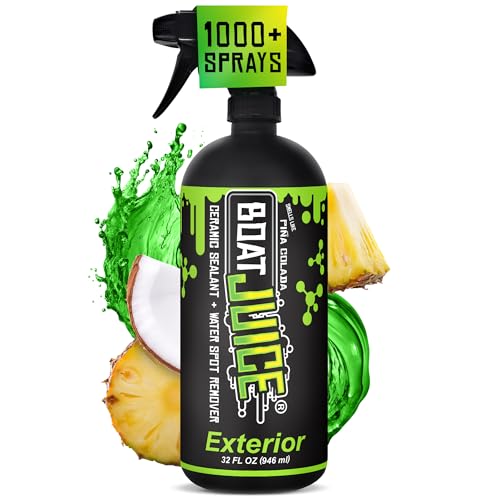
Best for: Quick cleanup after lake days
Boat Juice is a 32-ounce spray that combines exterior cleaning with an SiO2 ceramic sealant. It targets hard-water spots, calcium, and other mineral deposits on wet or dry surfaces. Spray it on, wipe it off, and skip the bucket and rinse step. The formula is listed for gelcoat, fiberglass, glass, chrome, vinyl, and plastic, so it can cover more than the hull. It is also marketed for jet skis, cars, trucks, and RVs.
The main appeal is convenience. One bottle handles spot removal and a protective finish instead of requiring separate products. Its ceramic layer is designed to repel water and help shield surfaces from UV exposure, oxidation, and future spotting. The manufacturer claims more than 1,000 sprays per 32-ounce bottle, which could make around $21 a reasonable seasonal purchase. The piña colada scent is a welcome change from vinegar-heavy cleaners, and the product is made in the USA. However, the advertised protection period is not clearly stated, so buyers should not assume it lasts through an entire season.
Pros
- Cleans and protects in one wipe, reducing steps after boating.
- Works on wet or dry boats and several exterior materials.
- More than 1,000 claimed sprays per bottle, with a tropical scent.
Cons
- Severe or older mineral buildup may still require repeated applications or scrubbing.
- The product does not state a specific lifespan for its ceramic protection.
4. Meguiar’s M1802 Marine Water Spot Detailer

Best for: Boat owners removing fresh water spots
Meguiar’s M1802 Extreme Marine Water Spot Detailer is a 32-ounce spray made for routine boat care. It targets water spots, salt deposits, and grime on marine surfaces such as gel coat, metal, and clear plastic. The formula is designed for spray-on, wipe-off use, so it fits quick cleanups after a day on the water or last-minute detailing before storage.
Its broad material compatibility gives it more range than a product made only for fiberglass. The bottle also provides enough solution for repeated maintenance, though actual coverage depends on the amount sprayed and the size of the vessel. At around $18, it sits below the cost of many specialty marine treatments. Meguiar’s traces its history to 1901 and marks 125 years in 2026, but the useful point here is simpler: this is a dedicated surface cleaner, not a wax or protective coating.
Pros
- Works on gel coat, metals, and clear plastics.
- Targets salt residue, grime, and marine water spots.
- 32-ounce bottle supports repeated spray-and-wipe cleanups.
Cons
- The description does not promise removal of older, etched-in spots.
- A 32-ounce bottle may be more product than occasional boat owners need.
3. Meguiar’s M47 Marine/RV Hard Water Spot Remover
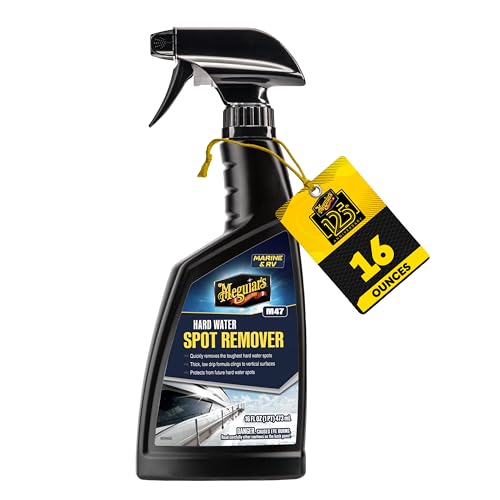
Best for: Boat and RV water-spot cleanup
Meguiar’s M47 Marine/RV Hard Water Spot Remover is a 16-ounce spray made for mineral deposits on boat and recreational vehicle surfaces. It targets the chalky rings and specks left by hard water, helping restore a clearer finish without abrasive scrubbing. The formula is intended for use across marine surfaces, but buyers should still follow the label and check an inconspicuous area first.
Application takes a short dwell time. Spray the affected area, let the cleaner work for 10 to 20 seconds, then wipe it away with a microfiber towel or cotton terry cloth. That process is simple, though larger boats and RVs will require repeated applications and plenty of towels. At around $17, the bottle costs less than many full detailing services, but prices can change. Meguiar’s also has a long automotive-care history, with the company marking 125 years in 2026. The main appeal here is focus. This cleaner handles mineral spotting without presenting itself as a polish or protective coating.
Pros
- Targets hard water mineral deposits on boat and RV surfaces.
- Works with a short 10 to 20-second dwell time.
- Supports wipe-off use with microfiber or cotton terry towels.
Cons
- A 16-ounce bottle may not cover a heavily spotted large boat or RV.
- It addresses mineral spots, not oxidation, deep stains, or lasting surface protection.
2. Chemical Guys Water Spot Remover Gel

Best for: Removing mineral spots from multiple surfaces
Chemical Guys Heavy Duty Water Spot Remover Gel comes in a 16-ounce bottle and targets mineral deposits left by hard water. It is made for painted panels, exterior glass, chrome, aluminum, stainless steel, and other metal surfaces. The gel format helps it cling to vertical areas instead of running off immediately. Apply it, rub gently, then rinse or wipe the surface clean.
Its broad surface range makes this more useful than a glass-only cleaner. The formula is designed for clear coat, polished metal, and glass, though careful application still matters. It can also remove light grime that may interfere with wax or sealant bonding, so it fits into a larger detailing routine. The bottle costs around $20, which is reasonable for a dedicated 16-ounce treatment. It also works on boats, RVs, and household glass or metal. However, this is a spot-treatment product, not a replacement for washing or paint correction.
Pros
- Gel clings to vertical panels, glass, and trim for easier application.
- Works across paint, chrome, aluminum, stainless steel, and exterior glass.
- Prepares cleaner surfaces for wax or sealant application.
Cons
- A 16-ounce bottle may run out quickly when treating an entire vehicle.
- Requires rubbing and rinsing or wiping, so severe or widespread spotting can take time.
1. Bling Sauce Hard Water Spot Remover
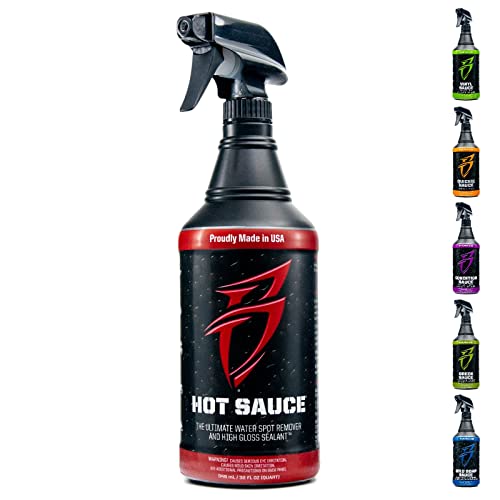
Best for: Boat owners after a day on water
Boat Bling Hot Sauce is a 32-ounce spray cleaner for hard water spots, mineral deposits, and light exhaust residue. It works on fiberglass, paint, plastic, chrome, stainless steel, glass, and other common boat or vehicle surfaces. Spray it on wet or dry areas, then wipe with a microfiber towel. The directions recommend working in 2- to 3-foot sections, starting at the rear where buildup may be heavier.
Its main advantage is the added protection. The soft-water-based, biodegradable formula is designed to clean without stripping existing wax, while adding wax sealants for a slicker finish. That makes it useful between full details after time on a lake, river, or ocean. The same bottle can suit boats, jet skis, RVs, trailers, cars, and motorcycles. At around $23, the 32-ounce size costs more than a basic household cleaner, but it offers a more surface-specific formula. For longer-term protection, the directions pair it with Quickie Sauce every three months.
Pros
- Targets hard water spots, mineral deposits, and light exhaust residue.
- Works across fiberglass, paint, plastic, chrome, stainless steel, and glass.
- Adds wax sealants while helping preserve existing wax protection.
Cons
- Heavy or baked-on deposits may still require repeated applications or scrubbing.
- The process requires clean microfiber towels, towel flipping, and fresh towels when needed.
Buying Guide
Surface compatibility matters most when choosing a boat water-spot cleaner. The wrong acid-based formula can dull gelcoat, stain aluminum, or damage decals after one use.
- Surface rating: Choose a product that specifically lists fiberglass, gelcoat, painted surfaces, or marine vinyl. If aluminum is present, confirm aluminum safety on the label before buying.
- Formula strength: Look for a stated pH or active ingredient. Mild acidic formulas around pH 2 to 4 suit routine mineral deposits, while stronger products need shorter contact times and stricter rinsing.
- Dwell time: Prefer clear directions, such as 30 seconds to 5 minutes. Avoid products that require overnight contact, since dried cleaner can leave new marks.
- Bottle size and value: A 32-ounce bottle suits occasional spot cleaning. For frequent whole-hull work, a 1-gallon container usually offers better cost per ounce, but compare dilution instructions first.
- Application and safety: A trigger sprayer helps with small areas, while a gel clings to vertical hulls. Choose gloves, eye protection, and ventilation requirements you can follow, and avoid products with no safety directions.
If you cannot have everything, prioritize verified compatibility with your boat’s surface over price, scent, or bottle size.
Frequently Asked Questions
How do you remove hard water spots from a boat?
Use a marine-safe hard water spot remover on a cool, wet surface, then rinse and dry it completely. Work in small sections, let the product dwell only for the label’s stated time, and use a soft microfiber cloth rather than an abrasive pad. A 2-by-2-foot section is easier to rinse before minerals dry again.
What ingredients work best in boat water spot removers?
Acid-based ingredients, such as citric or sulfamic acid, usually work best on mineral deposits covering fiberglass and gelcoat. Check the label for approved surfaces, dilution instructions, and contact time, since stronger formulas can damage wax, metal trim, or sensitive finishes. Test a 2-inch spot in an unseen area before treating the whole hull.
Can you use white vinegar to remove water spots from a boat?
Yes, diluted white vinegar can loosen light mineral spots, but it may not remove thick buildup from a boat’s finish. Apply it to a small 2-inch test area, leave it briefly, rinse with fresh water, and inspect the surface. Commercial marine cleaners usually make more sense for widespread deposits or spots that return after washing.
Are boat hard water spot removers safe for fiberglass?
Boat spot removers are generally safe for fiberglass and gelcoat when the label approves those surfaces and you follow the directions. Do not assume the same formula suits painted aluminum, vinyl, acrylic, or polished metal. Wear gloves, keep the product off surrounding hardware, and test a 2-inch hidden area before treating a large panel.
Conclusion
Bling Sauce Hard Water Spot Remover is the top pick for boat owners who want a focused cleaner for mineral deposits on marine surfaces. If your priority is a lower cost per ounce, choose a larger-container alternative instead, especially for regular maintenance or several boats. Before buying, double-check the bottle size, surface compatibility, quantity included, and current price, since product listings can change. Follow the label directions, and test any cleaner on a small, less visible area first. A water-spot remover should fit your boat’s finish and your cleaning routine. For occasional touch-ups, a smaller bottle may reduce waste, while frequent users can often justify a larger package. Rinse the surface well after cleaning to remove leftover product.