
Griot’s Garage 10624 Foam Waxing Pads are the top pick for most buyers, making them the best pads for griots polisher because their soft foam spreads wax and sealant evenly without aggressive cutting. They suit routine paint protection, and their reusable design can reduce the need for disposable applicators.
This guide is for car owners choosing pads for orbital polishers, from basic waxing to light finishing work. The most important factors are pad diameter, foam softness, and whether the pad matches your machine’s backing plate. A pad that fits poorly can wobble, waste product, or leave uneven coverage. The 7 picks below are ranked with clear reasons and honest drawbacks for each, so you can match the pad to your paint-care routine, machine size, and preferred finish.
Quick Comparison
| # | Product | Best For | Price | |
|---|---|---|---|---|
| 1 | Griot's Garage 10624 Foam Waxing Pads | DIYers applying wax by machine | ~$29 | View → |
| 2 | Griot's Garage 10516 Orange Foam Correcting Pads | Large-area paint correction jobs | ~$23 | View → |
| 3 | Griot's Garage 11241 Orange Foam Correcting Pads | Medium-pad correction for daily drivers | ~$19 | View → |
| 4 | Griot's Garage 10617 Orange Foam Correcting Pads | Tight-area correction around trim | ~$29 | View → |
| 5 | Griot's Garage 10619 Foam Finishing Pads | Final polishing after paint correction | ~$30 | View → |
| 6 | Griot's Garage 10518 Foam Finishing Pads | Full-vehicle finishing by machine | ~$23 | View → |
| 7 | Griot's Garage 11274 Foam Finishing Pads | Small-area finishing and polishing | ~$19 | View → |
7 Top Pads for Griot’s Polishers
This list is ranked from the seventh choice down to the top pick, with pad type and polishing needs in mind.
7. Griot’s Garage 11274 Foam Finishing Pads
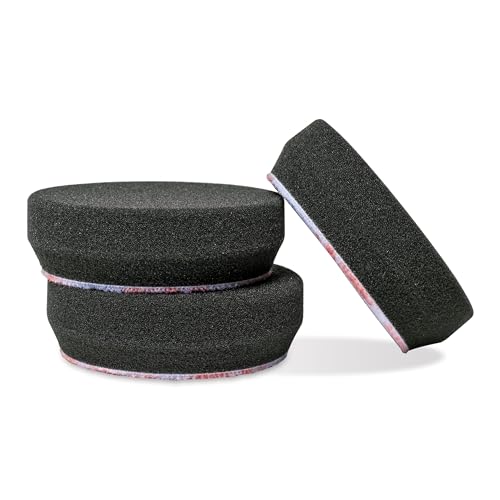
Best for: Light paint correction on small panels
Griot’s Garage 3-inch Black Foam Finishing Pads come in a three-pack for polishing delicate automotive paint. The soft foam is made for fine polishes and sealants, helping reduce light swirls, minor scratches, and similar surface defects. Their compact size suits spot work, trim-adjacent areas, and smaller orbital polishers. You can also use them by hand when a machine is not practical.
Each pad has a flat, beveled face that spreads product across the paint with fewer uneven spots. The upgraded micro hook-and-loop backing holds the pad securely and allows quick changes between steps. Thermoset bonding improves tear resistance and allows machine washing for repeated use. At around $19, the set offers a practical supply of finishing pads for occasional detailing or sealant application.
Pros
- Three 3-inch pads provide useful spares during a polishing session.
- Soft foam works with fine polishes and sealants on delicate paint.
- Machine-washable construction supports repeated use and quick cleanup.
Cons
- These pads target light defects, not deep scratches or heavy paint correction.
- The 3-inch size covers large panels slowly compared with larger polishing pads.
6. Griot’s Garage 10518 Foam Finishing Pads

Best for: Light paint correction and sealant application
The Griot’s Garage 5.5-inch black foam finishing pads come as a two-pack for polishing delicate automotive paint. Their soft foam suits fine polishes and sealants, helping reduce light swirls, minor scratches, and other small surface defects. The flat, beveled face spreads product evenly, and the pads can attach to compatible orbital polishers or work by hand. At around $23, the set offers a practical option for occasional detailing and routine paint care.
A micro hook-and-loop backing helps the pads stay attached during polishing and allows quicker changes between applications. The foam uses thermoset bonding, which improves resistance to tearing and allows machine washing after use. That makes these pads more suitable for repeated detailing than disposable applicators. Still, they are finishing pads, not aggressive cutting discs. They work best after heavier correction has already removed deeper defects. Buyers should also confirm that their polisher uses a compatible 5.5-inch backing setup before ordering.
Pros
- Two 5.5-inch pads provide a spare for switching products or replacing a worn pad.
- Soft foam and a beveled face support even application of fine polish and sealant.
- Machine-washable construction can reduce replacement costs over repeated uses.
Cons
- The gentle foam is not designed for deep scratches, heavy oxidation, or major paint correction.
- Compatibility depends on a suitable hook-and-loop backing plate and polisher setup.
5. Griot’s Garage 10619 Foam Finishing Pads
Best for: Light paint correction on orbital polishers
These Griot’s Garage pads are 6.5-inch black foam finishing pads for fine polish, sealant, and final paint refinement. The set includes two pads. Their softer foam suits delicate paint, where the goal is to reduce light swirls, minor scratches, and similar surface defects rather than remove heavy oxidation or deep marks. A flat, beveled face spreads product across the panel with less risk of uneven coverage. You can attach them to a compatible orbital polisher or use them by hand.
The main advantage is repeat-use convenience. A micro hook-and-loop backing helps the pads stay attached and allows quick changes between applications. Thermoset bonding gives the foam better tear resistance, and the pads can go in a washing machine after use. That makes the around $30 set more practical for owners who polish or apply sealant several times a year. Still, the black foam is a finishing choice, not a cutting pad. Pair it with the right polish and backing plate for the correction level you need.
Pros
- 6.5-inch faces cover broad panels efficiently.
- Soft foam suits fine polish and sealant work.
- Machine-washable construction supports repeated use.
Cons
- Two pads may be limiting for a full detail, since dirty foam needs replacement during a job.
- Finishing foam will not handle deep scratches, heavy oxidation, or major paint correction well.
4. Griot’s Garage 10617 Orange Foam Correcting Pads

Best for: Light to moderate paint correction
Griot’s Garage Orange Foam Correcting Pads are 6.5-inch polishing pads for painted vehicle surfaces. This set includes two orange foam pads, giving detailers a spare for longer jobs or a replacement after wear. They work by hand or with a random orbital polisher, so you can use the same pads for small touch-ups and broader correction work. At around $29, they sit in the midrange for a two-pack.
The beveled, flat face helps spread polish across the panel with fewer heavy spots. That design can also make residue easier to remove after polishing. Thermoset bonding and dense foam construction help the pads resist tearing during repeated use. Once dirty, you can machine-wash them instead of treating them as disposable accessories. A hook-and-loop backing makes attachment and removal quick, while keeping the pad secured during machine work. These pads are intended for light to moderate defects, such as mild swirls and surface haze. They are not a substitute for a heavier cutting pad when paint damage runs deeper.
Pros
- Two 6.5-inch pads provide a spare for multi-panel jobs.
- Hook-and-loop backing allows quick, secure attachment.
- Machine-washable foam supports repeated detailing sessions.
Cons
- Limited to light and moderate defects, not deeper scratches or heavy oxidation.
- The 6.5-inch size may be too large for tight panels or compact polishers.
3. Griot’s Garage 11241 Orange Foam Correcting Pads

Best for: small paint correction jobs
Griot’s Garage Orange Foam Correcting Pads are 3-inch polishing pads for removing light to moderate paint defects. The set includes three pads, giving detailers a spare for longer jobs or separate compounds. Their orange foam works with the brand’s car polishes and is suited to painted surfaces that need more correction than a finishing pad can provide. At around $19, the set costs less than many larger pad kits.
Each pad has a beveled, flat face that spreads polish evenly across a smaller working area. That shape can help limit excess product and make residue easier to wipe away. The pads attach with hook-and-loop backing, so changing them between passes takes little effort. Thermoset bonding and dense foam are designed to resist tearing through repeated use, while machine washing makes cleanup simpler. You can use them by hand or with a random orbital polisher. The 3-inch size also fits tighter areas, such as around door handles and body creases, but it covers less paint per pass than a 5- or 6-inch pad.
Pros
- Three 3-inch pads provide replacements during a detailing session.
- Beveled, flat foam supports even polish application and easier wipe-off.
- Hook-and-loop backing allows quick attachment to compatible tools.
Cons
- The small diameter means more passes on large panels.
- These pads target light to moderate defects, not deep scratches or heavy oxidation.
2. Griot’s Garage 10516 Orange Foam Correcting Pads

Best for: DIY detailers correcting light paint defects
Griot’s Garage Orange Foam Correcting Pads are 5.5-inch polishing pads made for light to moderate defects on painted surfaces. This set includes two pads, giving you a spare during a longer detailing session. They work with the brand’s car polishes and can be used by hand or with a random orbital polisher. At around $23, the pair fits the midrange price for reusable detailing pads.
The foam has a beveled, flat face that spreads polish evenly across the panel. That shape can help limit excess product and make wipe-off easier. Thermoset bonding and dense foam construction help resist tearing during repeated use, while the pads can go in a washing machine after polishing. A hook-and-loop backing allows quick attachment and removal, with a firm connection during machine use. The design offers useful flexibility, but these pads target mild correction rather than deep scratches or heavy oxidation.
Pros
- Two 5.5-inch pads provide a spare for rotating during a job.
- Machine-washable foam supports repeated detailing sessions.
- Hook-and-loop backing attaches quickly to a hand tool or random orbital polisher.
Cons
- Designed for light to moderate defects, not deep scratches or severe paint damage.
- A two-pad set may require pauses for cleaning when correcting a large vehicle.
1. Griot’s Garage 10624 Foam Waxing Pads
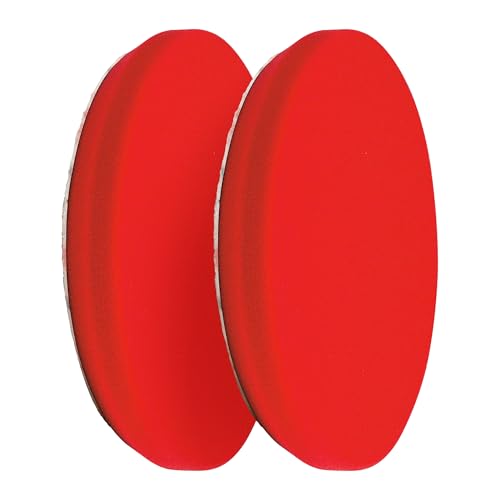
Best for: Smooth wax application with a random orbital
Griot’s Garage 6.5-inch Red Foam Waxing Pads come as a two-piece set for spreading car waxes and sealants. Each pad uses a flat, beveled face that helps lay down an even coat across panels. The foam suits hand application or a random orbital polisher, giving detailers two ways to work. At around $29, this set costs more than basic foam applicators, but it offers a reusable option for regular maintenance details.
The main strength is control. The broad face helps reduce missed spots, heavy patches, and excess product that can make removal harder. A micro hook-and-loop backing holds the pads to a compatible machine and allows quick changes between pads. Thermoset bonding supports machine washing, while the foam construction resists tearing during repeated use. These pads are made for finishing work, not paint correction. They can spread protection and improve gloss, but they will not remove scratches or oxidation like a cutting pad.
Pros
- 6.5-inch beveled faces spread wax and sealant evenly.
- Micro hook-and-loop backing supports fast, secure pad changes.
- Machine-washable construction allows repeated use and cleaning.
Cons
- The two-pad set costs around $29, which is high for simple applicators.
- These pads are intended for waxes and sealants, not scratch removal or heavy polishing.
Buying Guide
The most important factor is matching the pad to your Griot’s backing plate and machine type. Correct sizing keeps the pad centered, while the right cutting level prevents unnecessary clear-coat removal.
-
Diameter: Use pads made for your plate, such as 3-inch pads for a G8, 5.5-inch pads for a G9 with its 5-inch plate, or 6.5-inch pads for many 6-inch setups. Avoid pads larger than the plate.
-
Cut level: Choose microfiber or firm foam for deeper defects, medium foam for one-step polishing, and soft foam for wax, sealant, or final finishing.
-
Pad material: Foam pads suit most paint correction jobs. Microfiber usually cuts faster but can create more haze, so keep a finishing foam pad available.
-
Pack count: Buy at least 3 to 5 pads for a full-size vehicle. Extra pads help when one becomes saturated with polish or picks up removed paint.
-
Cleaning and durability: Look for washable, hook-and-loop pads with reinforced edges. Clean foam after each panel, and replace any pad with a torn edge or loose backing.
If you cannot have everything, prioritize the correct diameter and cut level over color, brand, or pack size.
Frequently Asked Questions
How do I choose pads for a Griot’s polisher?
Choose pads that match your Griot’s backing-plate diameter, machine type, and correction goal. Foam cutting pads remove heavier defects, polishing foam refines paint, and finishing foam spreads wax or sealant. For a dual-action model, use the pad size recommended for its backing plate, such as a 5-inch plate with 5- or 5.5-inch pads. Check the polisher manual before buying.
What pad type works best with a Griot’s machine?
Foam pads are the best starting choice for most Griot’s polishers because they offer predictable correction and work with compound, polish, or finishing products. Choose a cutting, polishing, or finishing grade based on the paint defect and product instructions. A three-pad setup gives you one option for correction, one for refining, and one for protection.
Can I use third-party pads on a Griot’s polisher?
Yes, you can use third-party pads if their diameter and backing interface fit your Griot’s backing plate. A 5-inch dual-action plate commonly pairs with pads near 5 to 5.5 inches, while larger plates need different sizing. Confirm the manual’s dimensions, since an oversized pad can reduce control and increase edge contact.
Are microfiber pads suitable for Griot’s polishers?
Microfiber pads suit heavier correction on compatible Griot’s machines, while foam pads usually offer easier control for polishing and finishing. Use microfiber with the compound’s stated pad guidance, then inspect the paint before moving to a softer pad. For example, keep separate pads for cutting and finishing, and clean each one after use.
Conclusion
Griot’s Garage 10624 Foam Waxing Pads remain the top pick for drivers who want a simple, paint-safe pad for applying wax, sealant, or finishing products with a Griot’s polisher. If your priority is heavier defect removal rather than spreading protection, choose a firmer cutting or polishing foam pad matched to your compound and machine. Before buying, double-check the pad size, backing-plate compatibility, package quantity, and current price, since listings can change. Foam softness also affects the result. Softer pads suit final applications, while denser foam can provide more cleaning power. Keep a separate pad for each product to reduce cross-contamination. Clean pads after use and replace them when the foam loses its shape or grip.