
CERAKOTE Platinum Rapid Ceramic Paint Sealant Spray is the best new car paint sealant for most buyers because its spray-on format keeps paint protection simple and accessible. It is designed for drivers who want a ceramic-style finish without working with a small bottle of coating or mixing chemicals. The product also fits routine detailing better than more involved paint treatments, since application centers on spraying and wiping the surface.
This guide is for new-car owners, used-car shoppers, and anyone trying to protect fresh paint from road grime, water spots, and daily exposure. The key factors include bottle size, expected coverage, surface preparation, application time, and how long the finish should last between uses. Those details affect the real cost and effort more than a glossy product label. The five picks below are ranked with clear reasons and honest drawbacks for each.
Quick Comparison
| # | Product | Best For | Price | |
|---|---|---|---|---|
| 1 | CERAKOTE Platinum Rapid Ceramic Paint Sealant Spray | Fast DIY ceramic spray users | — | View → |
| 2 | Jescar Power Lock Plus Polymer Sealant | Long-lasting gloss detailers | ~$34 | View → |
| 3 | Nu Finish Once A Year Car Polish and Sealant | Low-maintenance yearly car care | ~$12 | View → |
| 4 | Meguiar's M21 Synthetic Sealant | Professional machine polishing projects | ~$26 | View → |
| 5 | Chemical Guys JetSeal Paint Sealant | Multi-surface vehicle protection seekers | ~$40 | View → |
5 New Car Paint Sealants Worth Buying
This ranked list counts down from solid everyday options to the top paint sealant for lasting exterior protection.
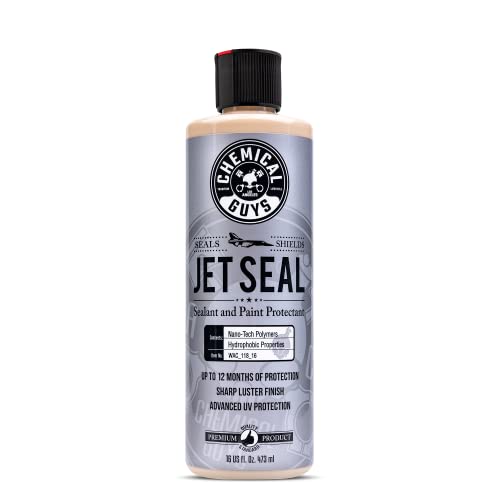
5. Chemical Guys JetSeal Paint Sealant
Best for: Drivers wanting longer-lasting paint protection
JetSeal is a synthetic sealant in a 16-ounce bottle. It bonds to painted surfaces, glass, and metal, creating a protective layer against road dirt, water spots, and environmental fallout. The formula also targets corrosion protection, making it useful for more than exterior paint. Chemical Guys lists it for cars, trucks, motorcycles, RVs, boats, and similar vehicles.
What stands out is its broad surface compatibility and flexible application. You can spread a thin coat by hand or machine, let it bond, then buff away the residue. The finish should add reflectivity, color depth, and a slick feel without requiring a specialized tool. Chemical Guys claims months of protection, which can help reduce how often you need to reapply a sealant. At around $40, the 16-ounce size is reasonable for owners who maintain several vehicles, though occasional users may find it costly.
Pros
- Works on paint, glass, and metal surfaces.
- Provides months of claimed protection between applications.
- Hand or machine application suits different detailing routines.
Cons
- It requires washing and surface preparation first, since it is not a cleaner.
- The bonding and buffing steps add time compared with a quick spray protectant.
4. Meguiar’s M21 Synthetic Sealant

Best for: DIY owners wanting glossy paint protection
Meguiar’s Professional M21 Synthetic Sealant 2.0 is a 16-ounce bottle of polymer-based paint protection for cars and trucks. It spreads across painted panels, then wipes away to leave a slicker surface. The formula aims to add water beading and a darker, more reflective finish than unprotected paint. At around $26, it costs more than basic wax but remains accessible for home detailing.
Its strongest feature is the visual improvement. M21 can reduce the appearance of fine scratches and swirl marks, though it does not repair damaged clear coat. The smooth application also helps make large vehicles less tiring to cover. A clean, dry surface will give the sealant the best chance to bond, so washing and drying come before application. Meguiar’s says the product delivers protection through changing weather, but it does not list a fixed protection period. That makes maintenance intervals hard to predict. The product also comes from a brand marking 125 years in the automotive-care business in 2026, including professional and DIY products.
Pros
- 16 ounces provides enough product for repeated paint-care sessions.
- Hydrophobic polymers encourage water beading during wet weather.
- Helps disguise fine swirls while adding darker-looking reflections.
Cons
- It only masks minor blemishes visually, so deep scratches still need correction.
- The listed features do not provide a specific protection lifespan.
3. Nu Finish Once A Year Car Polish and Sealant

Best for: Drivers wanting yearly paint protection
Nu Finish Once A Year Polish and Sealant is a 16-ounce liquid product for painted surfaces and chrome. Its ceramic technology is designed to refresh shine, reduce the appearance of fine swirls and light scuffs, and leave a glossy finish. One application is claimed to protect paint for a year, based on the average number of automatic car washes in the United States. Around $12, it costs less than many professional detailing services.
The application process sets this car polish apart. It does not require rubbing or buffing, and the instructions allow use in direct sunlight, which can make larger vehicles easier to handle. The sealant also promotes water beading, so rain and rinse water may leave less moisture on the surface. Still, it is not a replacement for proper washing and drying. Deep scratches, oxidation, and damaged clear coat need more involved repair. The product may suit owners who want a quick paint-care step without buying a separate wax and sealant.
Pros
- The 16-ounce bottle provides multiple applications for many vehicles.
- No rubbing or buffing can reduce application time and effort.
- Ceramic protection helps water bead and supports easier maintenance.
Cons
- It will not remove deep scratches or repair damaged clear coat.
- The one-year protection claim depends on wash frequency, weather, and surface preparation.
2. Jescar Power Lock Plus Polymer Sealant

Best for: Drivers wanting easy, glossy paint protection
Jescar Power Lock Plus is a 16-ounce liquid polymer sealant for painted vehicle surfaces. It creates a protective layer that helps shield paint from UV rays and everyday environmental exposure. The formula works on both new and reconditioned paint, so it fits routine detailing and paint-correction projects. At around $34, it costs more than many basic waxes, but the larger bottle can cover multiple applications.
Its main advantage is application flexibility. You can spread it by hand for smaller jobs or use a machine for faster, more even coverage across a full vehicle. The polymer-based formula also aims to leave a slick, high-gloss finish without limiting use to one paint type. Keep expectations realistic, though. This is a paint sealant, not a permanent coating, so protection will eventually need renewal. Results also depend on clean, properly prepared paint and careful removal of residue.
Pros
- 16-ounce bottle provides enough product for repeated detailing sessions.
- Polymer protection helps reduce exposure from UV rays and environmental contaminants.
- Supports both hand and machine application on new or reconditioned paint.
Cons
- Around $34, it costs more than many standard car waxes.
- Protection is not permanent, so the surface needs periodic reapplication.
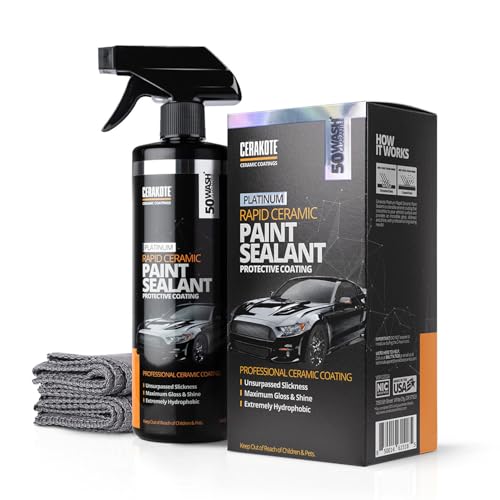
1. CERAKOTE Platinum Rapid Ceramic Paint Sealant Spray
Best for: DIY owners wanting slick paint protection
CERAKOTE Platinum Rapid Ceramic Paint Sealant Spray is a 14-ounce ceramic spray coating for vehicle paint. It applies after a normal wash and dry, so you do not need special equipment or a garage setup. Spray a light coat over one panel or a small section, then buff it with a clean towel. The process is simple, but careful coverage still matters. Too much product can make buffing harder.
Its main draw is the claimed 50-wash durability rating, which exceeds a short-term detail spray. The finish is designed to add strong gloss, a slick surface, and water-shedding behavior. That hydrophobic layer can help water, mud, road grime, and dirt release more easily during future washes. The rating is a manufacturer claim, not a guaranteed service life. Results will vary with washing methods, weather, paint condition, and preparation. This spray also works as a surface protectant, not a substitute for paint correction or a professionally installed coating.
Pros
- A 14-ounce bottle provides product for treating multiple panels.
- The rated 50-wash lifespan may reduce how often you need to reapply protection.
- Water-repellent behavior can help limit grime sticking to painted surfaces.
Cons
- The vehicle must be washed and dried first, and rushed application can leave uneven residue.
- It does not repair scratches, oxidation, or paint defects before application.
Buying Guide
The most important factor is compatibility with modern clear coats, because a harsh or poorly matched formula can leave streaks or reduce gloss on fresh factory paint. Choose a product labeled for clear-coated automotive finishes, with clear curing instructions and no abrasive polishing agents.
- Durability: Look for a claimed protection period of at least 3 to 6 months for a daily-driven car, or 9 to 12 months for a longer-lasting formula. Treat marketing claims as estimates.
- Application conditions: Pick a sealant that cures at about 60 to 80°F and needs 2 to 12 hours without rain. A short wipe-on, wipe-off window helps first-time users.
- Coverage: A 16-ounce bottle usually gives several applications on one sedan. Confirm the label states coverage for at least 2 to 4 vehicles, not just one panel.
- Finish and maintenance: Choose a formula that works with your paint color and can handle regular pH-neutral car soap. Dark colors benefit from low-streak formulas.
- Total cost: Budget $20 to $50 for a consumer bottle, or $50 to $100 for a kit with applicators, towels, and prep cleaner. Check replacement towel count and size.
If you cannot have everything, prioritize clear-coat compatibility, since protection that damages or clouds the finish is no bargain.
Frequently Asked Questions
How long does a paint sealant last on a new car?
Most modern paint sealants protect a new car’s finish for three to six months, though the exact period depends on the formula, washing, weather, and storage. Look for a product rated for at least 12 weeks, then refresh it before water stops forming tight beads.
What should I look for in a car paint sealant?
Choose a paint sealant that matches your car’s clear coat and your maintenance routine. A spray formula suits quick applications, while a liquid polymer sealant usually needs more buffing and curing time. Check the label for a cure period, often between 30 minutes and 24 hours.
Can you apply paint sealant to a brand-new car?
Yes, you can apply a paint sealant to a new car, but wash and decontaminate the surface first. Remove transport film, road grime, and light residue before spreading a thin coat. Many products need 12 to 24 hours without rain or washing after application.
Are ceramic coatings better than traditional paint sealants?
Ceramic coatings are usually more durable than traditional paint sealants, but they cost more and require stricter preparation. A sealant may last three to six months, while a professionally applied coating can protect for two to five years, depending on the product and upkeep.
Conclusion
CERAKOTE Platinum Rapid Ceramic Paint Sealant Spray is the top pick for owners who want a quick spray-on option for protecting a newer vehicle’s clear coat. If your priority is a lower upfront cost and a familiar hand-applied finish, choose a traditional liquid wax instead of a ceramic spray. Before buying, double-check the bottle size, paint and surface compatibility, included quantity, and current price, since package options can vary. Follow the label closely, especially for surface preparation, drying time, and removal. New paint still benefits from regular washing and careful drying, even after applying a sealant. Choose the formula that fits your maintenance habits, vehicle finish, storage space, and budget.