
Chemical Guys Total Interior Cleaner & Protectant is the top pick for most buyers, mainly because its ready-to-use formula cleans many interior surfaces without requiring a separate protectant. For shoppers seeking the best homemade car interior cleaner, this spray is a practical all-in-one choice for dashboards, vinyl, plastic, and other hard surfaces. It also comes in a 16-ounce bottle, giving regular car owners enough product for routine touch-ups without storing a large container.
This guide is for drivers who want to remove dust, fingerprints, and light grime without damaging interior materials. The key factors for a cleaner like this include surface compatibility, finish, bottle size, and how much scrubbing each mess requires. The five picks below are ranked with clear reasons and honest drawbacks for each, so you can match a formula to your car.
Quick Comparison
| # | Product | Best For | Price | |
|---|---|---|---|---|
| 1 | Chemical Guys Total Interior Cleaner & Protectant | Best for routine interior maintenance | ~$12 | View → |
| 2 | CarGuys Interior Car Cleaner Stain Remover | Best for stain-prone family vehicles | ~$20 | View → |
| 3 | Armor All Multi-Purpose Car Cleaner Spray | Best for budget-conscious car owners | ~$7 | View → |
| 4 | Chemical Guys Total Interior Cleaner & Protectant | Best for protective dashboard cleaning | ~$12 | View → |
| 5 | P&S Xpress Interior Cleaner | Best for professional-style interior detailing | ~$32 | View → |
5 DIY Car Interior Cleaners Worth Making
These homemade formulas are ranked by cleaning strength, surface safety, and ease of mixing, counting down to the top pick.
5. P&S Xpress Interior Cleaner

Best for: Regular car, truck, RV, or boat interiors
P & S Professional Detail Products Xpress Interior Cleaner is a ready-to-use, 1-gallon interior cleaner for routine vehicle care. It targets dirt, grease, oil, and traffic marks on leather, vinyl, plastic, rubber, wood, and fabric. The formula requires no dilution, so you can spray it onto the surface or a microfiber towel, agitate heavier soil with a detailing brush, and wipe it away.
The main appeal is its broad material compatibility in one bottle. It aims to leave surfaces dry to the touch without a greasy film or added shine, while the fresh scent makes the cabin feel cleaner after use. Around $32, the gallon size can make sense for frequent detailing or several vehicles. It belongs to the Renny Doyle Double Black Collection, a line marketed toward professional detailers and serious car-care users.
Pros
- One cleaner covers leather, vinyl, plastic, rubber, wood, and fabric.
- Ready-to-use formula saves time and avoids measuring dilution ratios.
- No-residue finish helps preserve a natural-looking interior surface.
Cons
- A 1-gallon container takes up more storage space than a spray bottle.
- The fixed ready-to-use formula offers less control than a concentrated cleaner.
4. Chemical Guys Total Interior Cleaner & Protectant
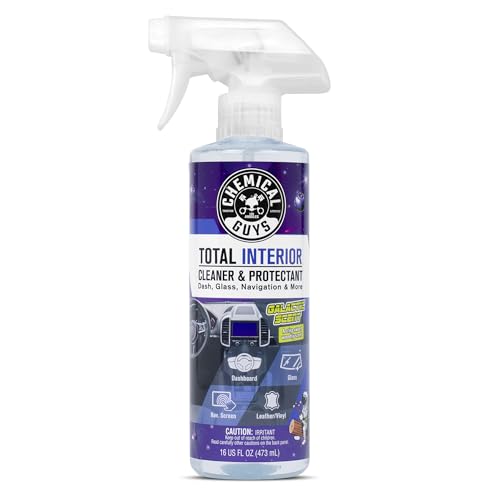
Best for: Routine cleaning across mixed interiors
Chemical Guys Total Interior Cleaner & Protectant is a 16-ounce spray for regular vehicle cleanup. One bottle is designed for dashboards, leather, vinyl, carpet, glass, plastic, screens, and trim. That broad material coverage can reduce the need for several separate cleaners. The formula targets dust, dirt, light stains, and interior odors, then leaves a protective layer on treated surfaces.
Its main advantage is convenience across many vehicle types, including cars, trucks, SUVs, motorcycles, and RVs. The Galactic scent combines woodsy musk with berry notes, which may make cleaning more pleasant while helping mask unwanted smells. Around $12, it costs little compared with buying separate products for glass, plastic, and upholstery. Still, surface compatibility does not remove the need to follow care guidance or spot-test delicate materials first. Use it as a maintenance cleaner, not a replacement for a dedicated stain remover.
Pros
- One 16-ounce bottle covers leather, vinyl, carpet, glass, plastic, screens, and trim.
- Removes everyday dust, dirt, light stains, and some interior odors.
- Protective finish helps treated surfaces look cleaner between detailing sessions.
Cons
- It is intended for light stains, so embedded grime and heavy spills may require a stronger specialty cleaner.
- The Galactic scent may feel too noticeable or sweet for drivers who prefer an unscented interior.
3. Armor All Multi-Purpose Car Cleaner Spray

Best for: Routine cleaning of cloth car interiors
Armor All Multi-Purpose Car Cleaner Spray comes in one 16 fl oz bottle and targets common interior messes. Its formula is made for dashboards, vinyl, clear plastics, carpet, fabric, and other automotive surfaces. It tackles dust, dirt, grime, and smudges, including marks left by sunscreen. The spray also carries a new car scent, which may appeal to drivers who want a fresher cabin after cleaning.
The broad surface coverage is the main reason to consider it. One bottle can handle hard trim and soft upholstery, so you do not need separate cleaners for every part of the cabin. Armor All says the formula is tested safe for automotive surfaces, but careful application still makes sense on delicate or unfamiliar materials. At around $7, it is a low-cost option for regular touch-ups and quick cleanup. It is best viewed as a surface cleaner, not a full detailing system. The product details do not promise disinfecting or odor removal.
Pros
- Cleans dashboards, vinyl, and clear plastic surfaces.
- Works on carpet and fabric, including sunscreen smudges.
- A 16 fl oz bottle costs around $7.
Cons
- The new car scent may be too strong for scent-sensitive drivers.
- It does not claim to disinfect surfaces or remove deep odors.
2. CarGuys Interior Car Cleaner Stain Remover

Best for: Multi-surface interior spot cleaning
CarGuys Interior Car Cleaner is an 18-ounce spray cleaner for car seats, carpet, fabric upholstery, leather, vinyl, plastic, rubber, and metal. It is aimed at spills, grease, ground-in dirt, and other marks across the cabin. The kit includes one microfiber towel, so buyers can start cleaning without purchasing a separate cloth. At around $20, it costs more than basic household cleaners but covers several interior materials with one bottle.
The no-rinse formula is designed for quick jobs. Spray it onto the surface or towel, work the area lightly, then wipe it away. That approach avoids a bucket and reduces cleanup time. The formula is also intended to dry without a sticky or oily film, which matters on dashboards, steering wheels, and trim. One 18-ounce bottle should handle multiple small jobs, though larger vehicles or heavily soiled interiors will use it faster. As with most cleaners, spot testing is sensible, especially on delicate leather or unusual finishes.
Pros
- Works across leather, carpet, fabric, vinyl, plastic, rubber, and metal.
- No-rinse application reduces water use and cleanup.
- Includes a microfiber towel with the 18-ounce bottle.
Cons
- One towel may not be enough for a full deep-cleaning session.
- Delicate or heavily finished surfaces should be spot-tested first, which adds an extra step.
1. Chemical Guys Total Interior Cleaner & Protectant
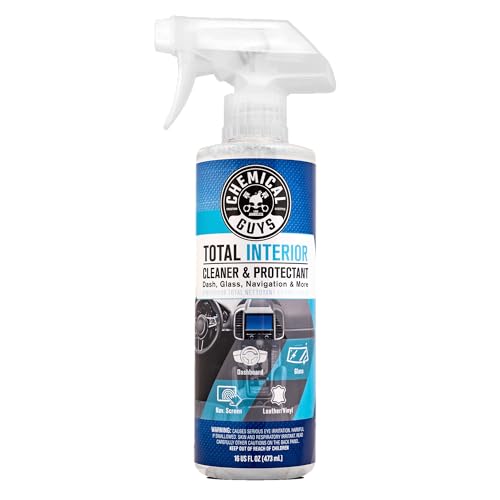
Best for: Quick, routine interior cleanups
Chemical Guys Total Interior Cleaner is a 16-ounce spray for routine car care. It is made for leather, vinyl, plastic, rubber, and glass, so one bottle can cover dashboards, door panels, trim, seats, and infotainment screens. The formula is designed to lift dust, body oils, and light grime without rinsing. Spray it onto a surface, wipe it away, and move on.
Its main strength is the broad surface range. Many interior products target only plastic or upholstery, while this cleaner also works on glass and rubber. It leaves a natural-looking finish rather than a glossy, slippery coating. The protective layer may help reduce fingerprints, dust buildup, and marks from daily use. At around $12, the 16-ounce size is reasonably priced for drivers who want one product for regular touch-ups. Still, this is best viewed as a maintenance cleaner, not a dedicated stain remover or deep-cleaning treatment.
Pros
- Works across leather, vinyl, plastic, rubber, and glass.
- Requires only spraying and wiping, with no rinse step.
- Leaves a low-sheen finish that is less greasy than glossy dressings.
Cons
- The 16-ounce bottle may run out quickly during repeated full-interior details.
- It may not handle set-in stains, heavy grime, or odor problems as well as specialized cleaners.
Buying Guide
Material compatibility matters most when choosing a DIY car-cabin cleaner. A mixture that removes grime but damages vinyl, leather, screens, or fabric can cost far more than a commercial bottle.
- Surface coverage: Match the recipe to your materials. Use mild soap and water for vinyl and plastic, but use a leather cleaner for leather and avoid soaking suede, screens, speakers, or seat controls.
- Ingredient safety: Choose distilled water with 1–2 drops of unscented dish soap per 16 ounces. Never mix bleach, ammonia, vinegar, or hydrogen peroxide.
- Test procedure: Apply the mixture to a hidden 1-inch area first. Wait 24 hours and check for fading, stickiness, cracking, or color transfer before cleaning visible sections.
- Application method: Spray 2–3 pumps onto a microfiber cloth, not directly onto the dashboard. Wipe one small section at a time, then dry it within 5 minutes.
- Freshness and storage: Make an 8-ounce batch and label the date. Store it in a clean, sealed bottle, and discard it after 7 days to limit bacterial growth.
If you cannot satisfy every factor, prioritize material compatibility and a small hidden-area test.
Frequently Asked Questions
How do I make a homemade car interior cleaner?
Make a mild interior spray with 1 cup of distilled water, ½ cup of white vinegar, and 1 teaspoon of mild dish soap. Pour it into a labeled spray bottle, shake gently, and apply it to a microfiber cloth rather than directly to the dashboard. Use a second damp cloth to remove residue, then dry the surface.
Can I use vinegar in a DIY car cleaner?
You can use diluted vinegar on hard plastic and vinyl, but avoid it on leather, suede, touchscreens, and unsealed trim. Combine 1 part vinegar with 3 parts water, test a hidden 2-inch area, and wipe it off after 30 seconds. If the finish changes color or texture, stop using the mixture.
What is the best homemade cleaner for fabric car seats?
The safest simple homemade option for fabric car seats is a solution of 2 cups warm water and 1 teaspoon clear dish soap. Blot the stain with a cloth instead of scrubbing, then remove soap with a second damp cloth. Do not soak the padding, since trapped moisture can cause odors or mildew.
Are homemade car cleaners safe for leather?
Homemade car cleaners are not automatically safe for leather; use a damp cloth and a tiny amount of pH-neutral soap only after testing a hidden spot. Work in a 2-inch section, wipe away residue with clean water, and dry the area with a soft towel. Skip vinegar, baking soda, alcohol, and essential oils, which can alter the finish or leave grit.
Conclusion
Chemical Guys Total Interior Cleaner & Protectant is the top pick for drivers who want one ready-to-use formula for dashboards, door panels, vinyl, plastic, and other common cabin surfaces. If your priority is a lower-cost, DIY approach, choose a simple diluted soap solution for light dust and grime, but use less moisture around screens, switches, and stitched materials. Before buying, double-check the bottle size, surface compatibility, package quantity, and current price, since value can change between small sprays, larger refills, and bundled packs. For older interiors, read the label carefully and test any cleaner on a hidden spot first, since some finishes can discolor, dry out, or turn cloudy after contact.