
For most buyers, Engine AID Engine Bay Cleaner is the best engine cleaner without water because its waterless format simplifies routine engine-bay cleanup. It fits drivers who want to remove dust, light grease, and road grime without spraying a hose near electrical parts. The formula is positioned for careful cleaning, not heavy mechanical degreasing, so expectations matter.
This guide is for car owners maintaining their vehicles at home, especially those without easy access to a driveway or pressure washer. For this type of cleaner, material compatibility and cleaning strength matter most. The product should be suitable for common engine-bay surfaces, including plastic, rubber, painted metal, and coated components. Application method also matters, since sprays, wipes, and foam cleaners create different levels of control. The five picks below are ranked with clear reasons and honest drawbacks for each.
Quick Comparison
| # | Product | Best For | Price | |
|---|---|---|---|---|
| 1 | Engine AID Engine Bay Cleaner | DIY Engine Bay Maintenance | ~$25 | View → |
| 2 | Zep Cherry Bomb Auto+ Degreaser & Cleaner | Heavy Grease Removal | ~$6 | View → |
| 3 | Engine AID Engine Bay Cleaner | Routine Under-Hood Cleaning | ~$45 | View → |
| 4 | 3D Grand Blast Engine Degreaser | Deep-Cleaning Older Engines | ~$37 | View → |
| 5 | Griot's Garage 20244 Engine Bay Dressing | Plastic and Rubber Restoration | ~$18 | View → |
5 Top Waterless Engine Cleaners
This ranked list counts down from fifth to first, weighing cleaning power, ease of use, and value.
5. Griot’s Garage 20244 Engine Bay Dressing

Best for: Owners refreshing a clean engine bay
Griot’s Garage Engine Bay Dressing is a spray-on finish for plastic, rubber, and other surfaces inside the engine compartment. The 12.5-ounce bottle provides a practical amount for routine detailing, and the formula is designed to restore a cleaner, factory-style appearance to dull engine-bay parts. At around $18, it costs more than basic household protectants, but it targets a specific automotive use.
The main difference is the finish. After cleaning the bay, apply a light, even coat for a satin appearance. Extra coats can create more shine, so the final look is adjustable rather than fixed. The product is meant to dry to the touch without leaving an oily film. That matters because greasy dressings can collect dust and road grime. Griot’s also says the formula helps protect plastic and rubber from fading, discoloration, and cracking over time. Still, this is a finishing spray, not a cleaner. Heavy dirt and grease must be removed first. Application is quick, and the spray can cover an engine bay in minutes.
Pros
- Dry-touch finish is less likely to attract dust than greasy dressings.
- Works on engine-bay plastic, rubber, and other interior surfaces.
- Adjustable appearance, from satin with one coat to glossier with more layers.
Cons
- Surfaces must be cleaned first, so it does not replace an engine-bay cleaner.
- Buyers wanting a matte finish may need to limit the amount applied, since extra coats increase shine.
4. 3D Grand Blast Engine Degreaser

Best for: Deep-cleaning engine bays and undercarriages
3D Grand Blast is a heavy-duty degreaser for engine compartments, wheel wells, exhaust parts, and other grimy vehicle surfaces. The 1-gallon container suits frequent detailing or shared garage use better than a small spray bottle. Its formula targets baked-on oil, grease, and road film, then rinses away without a stated residue. The product is made in the USA and comes from a company with more than 25 years in automotive detailing.
What stands out is its broad surface compatibility. The cleaner is designed for metal, plastic, painted areas, and rubber, so one bottle can handle several parts of a vehicle. Its low-odor, non-staining formula may appeal to people who clean indoors or dislike harsh fumes. The biodegradable claim also gives environmentally minded buyers a reason to consider it. At around $37, the price is reasonable for a full gallon, though the value depends on how often you clean vehicles.
Pros
- A full 1-gallon size works well for regular detailing and larger cleaning jobs.
- Designed for metal, plastic, paint, and rubber surfaces.
- Low-odor, non-staining formula rinses clean without listed residue.
Cons
- Heavy grime may still require agitation, despite the fast-acting claim.
- A gallon takes more storage space and may be excessive for occasional users.
3. Engine AID Engine Bay Cleaner

Best for: Waterless engine bay touch-ups
Engine AID is a 32-fluid-ounce cleaner made for car engine bays. Its waterless formula targets dirt, oil, and grease without requiring a hose or bucket. The package also includes two microfiber towels for wiping away loosened grime. That setup suits driveway detailing, especially where runoff or nearby water access could be a problem. The formula is listed as non-flammable and eco-conscious, which may appeal to buyers who want a less hazardous cleaning product.
The main draw is the simple process. Apply the cleaner, wipe the area, and let the quick-drying formula finish without a long wait before driving. It is designed for different vehicle types and intended to be gentle on sensitive engine components. Still, results will depend on how long the grime has built up and how much wiping the bay needs. At around $45, this kit costs more than a basic household degreaser, but the included towels add some value. It aims for a cleaner, maintained engine bay without using water.
Pros
- Cleans dirt, oil, and grease without water.
- Non-flammable formula adds a practical safety benefit.
- Includes two microfiber towels for wiping and finishing.
Cons
- A 32-fluid-ounce bottle may not last through frequent full-bay cleanings.
- Waterless cleaning can require extra wiping on thick, baked-on grime.
2. Zep Cherry Bomb Auto+ Degreaser & Cleaner

Best for: Grease-covered vehicles and garage tools
Zep Cherry Bomb Auto+ Degreaser & Cleaner is a 32-ounce spray cleaner for automotive, marine, RV, garage, and household jobs. Its formula targets oil, grease, road dirt, and grime on surfaces such as fiberglass, steel, chrome, stainless steel, painted metal, rubber, and finished concrete. Around $6, it costs little enough to keep in a utility closet or workshop.
The main draw is its broad use range. One bottle can handle vehicle parts, boat surfaces, RV cleanup, grills, appliances, garage doors, shop tools, trash cans, and garage floors. It also leaves a bold cherry fragrance, which may help cover stale odors in work areas. Still, the scent is strong, so it may not suit people who prefer low-fragrance cleaners. As with other powerful degreasers, spot-testing is wise on painted, rubber, or finished surfaces before treating a large area.
Pros
- Works across many materials: Suitable for fiberglass, steel, chrome, stainless steel, painted metal, rubber, and finished concrete.
- Useful beyond auto care: Handles grease on grills, appliances, tools, garage floors, trash cans, and RVs.
- Large 32-ounce bottle: Provides a practical amount for repeated cleaning jobs at around $6.
Cons
- Strong cherry fragrance: The odor may be overpowering in small garages, cabins, or utility rooms.
- Needs surface caution: Its heavy-duty formula may require a spot test on delicate finishes, rubber, or painted surfaces.
1. Engine AID Engine Bay Cleaner
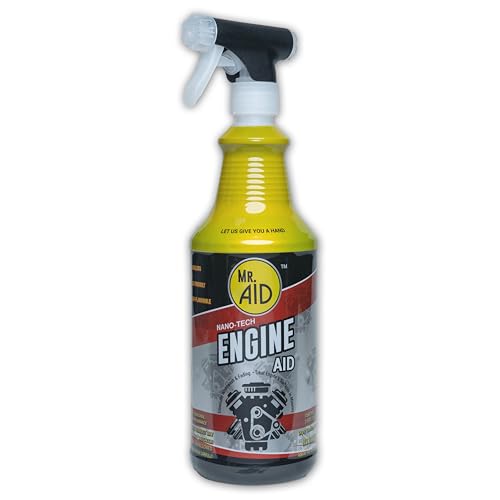
Best for: Quick, water-free engine bay touch-ups
Engine AID is a waterless cleaner for car engine bays. The 32-fluid-ounce bottle is designed to break down dirt, oil, and grease without rinsing. Its non-flammable formula may suit drivers who want a simpler cleaning routine around engine components. The eco-friendly design also appeals to buyers who want to limit water use. The package includes one microfiber towel, so it covers a basic cleanup rather than a full detailing kit.
The main draw is convenience. Apply the cleaner as directed, wipe the surface, and let the quick-drying formula finish without a hose or bucket. It is listed for different vehicle types and is intended to be gentle on sensitive engine parts. That makes it useful before a car show, a sale, or routine maintenance. Still, waterless cleaning does not mean every stain disappears in one pass. Heavy, baked-on grease may need repeated treatment and more towels. At around $25, it costs more than a basic household cleaner, but the purpose-built formula and included cloth may suit occasional engine-bay care.
Pros
- Cleans engine bays without a hose, bucket, or rinse water.
- Non-flammable formula reduces one concern during engine-bay maintenance.
- Includes one microfiber towel and dries quickly after application.
Cons
- Thick, baked-on grease may require repeat applications or another cleaner.
- One towel may be insufficient for a heavily soiled engine bay.
Buying Guide
The most important factor is formula compatibility, because an engine bay contains metal, plastic, rubber, paint, and electrical connectors. Choose a waterless engine cleaner that clearly lists safe surfaces and application limits.
- Surface compatibility: Look for labels covering painted metal, rubber hoses, plastic covers, and electrical components. Avoid products that require keeping spray away from connectors unless you can work around them.
- Ready-to-use formula: Choose a premixed spray if you want no water, measuring, or bucket. A 16- to 24-ounce bottle usually provides enough product for one moderately dirty engine bay.
- Dwell time: Favor instructions that specify a short 2- to 5-minute dwell period before wiping. Do not choose a product that requires soaking sensitive parts or drying for several hours.
- Residue control: Select a cleaner designed for wipe-off use, especially if you cannot rinse afterward. A formula that leaves an oily film can attract dust to belts, hoses, and plastic covers.
- Price and accessories: Expect to pay about $10 to $25 for a single 16- to 32-ounce bottle. A kit with detailing brushes and microfiber towels may cost $20 to $40.
If you cannot have everything, prioritize verified surface compatibility over scent, accessories, or a lower price.
Frequently Asked Questions
How do you choose an engine cleaner without water?
Choose a waterless engine cleaner by checking its surface compatibility, degreasing strength, residue, and wipe-off instructions. Products made for automotive plastics and painted metal are generally better suited than household solvents. A 16-ounce bottle may cover several light cleanups, but heavy grease often requires a second application.
What is the best way to use a waterless engine cleaner?
Spray the cleaner onto a cloth or cool engine surface, allow the stated dwell time, then wipe away loosened grime. Work in small sections and use a soft microfiber towel to avoid spreading oily residue. For example, a 30-second dwell time may suit light dust, while thick deposits need gentle brushing.
Can you use an engine degreaser without water on a hot motor?
No, you should not use a waterless engine degreaser on a hot motor; let the engine cool before applying it. Many labels call for a cool surface, often below 100°F, and warn against exhaust manifolds or other hot parts. Heat can dry the product too quickly and increase odor or residue.
Are waterless engine cleaners safe for plastic and rubber parts?
They are safe for plastic and rubber only when the label lists those materials as compatible. Test a small hidden area first and wipe it dry after the recommended dwell time. Avoid products with strong solvents near hoses, seals, and electrical connectors unless the manufacturer approves them. A 5-minute spot check can reveal whitening, swelling, or sticky residue.
Conclusion
Engine AID Engine Bay Cleaner is the top pick for drivers who want a water-free way to clean routine engine-bay grime with less mess and fewer supplies. If your priority is lower cost per use, choose a larger-format alternative with clear instructions for plastic, rubber, painted metal, and electrical areas, since extra product can make repeated cleanups more practical. Before buying, double-check the bottle size, material compatibility, product quantity, and current price, because package sizes and listings can change. Use a small amount on a cool engine, work in sections, and wipe residue with clean microfiber towels. Keep expectations realistic: these cleaners remove surface dirt and oily film, but heavy buildup may need several passes or a dedicated degreaser.