
KRAKEN BOND Engine Cleaner Spray is the top pick for most buyers because its spray format makes targeted application simple. If you need the best engine cleaner spray for routine degreasing, this option offers a practical starting point without requiring a separate applicator. It suits drivers who want to remove oil, road grime, and buildup from engine-bay surfaces before rinsing or wiping.
This guide is for home mechanics, car owners, and anyone preparing an engine compartment for inspection or maintenance. The most important factors are coverage and material compatibility. A cleaner should cover enough surface area for the job while remaining suitable for metal, plastic, rubber, and painted parts when used as directed. Drying time and spray control also affect cleanup. The five picks below are ranked with clear reasons and honest drawbacks for each.
Quick Comparison
| # | Product | Best For | Price | |
|---|---|---|---|---|
| 1 | KRAKEN BOND Engine Cleaner Spray | Best for Stubborn Engine Grime | ~$21 | View → |
| 2 | Chemical Guys Signature Series Orange Degreaser Spray | Best for Citrus-Based Degreasing | ~$12 | View → |
| 3 | CRC Heavy Duty Degreaser Spray | Best for Heavy-Duty Workshop Cleanup | ~$9 | View → |
| 4 | Gunk Engine Cleaner Foaming Spray | Best for Foaming Engine Cleaning | ~$31 | View → |
| 5 | DURA-COATING TECHNOLOGY DDE Engine Cleaner & Detailer Combo | Best for Cleaning and Detailing Fans | ~$48 | View → |
5 Engine Cleaner Sprays Worth Considering
These five engine-cleaning sprays are ranked by cleaning power, ease of use, surface safety, and value, counting down to the top pick.
5. DURA-COATING TECHNOLOGY DDE Engine Cleaner & Detailer Combo

Best for: DIY engine bay and trim cleaning
This combo pairs two 16-ounce sprays for routine vehicle detailing. The DDE Spray Detailer is a water-based dressing for plastic and rubber trim inside or outside the car. It dries on the surface with a high-luster finish, so it can leave trim looking brighter without the oily feel common with some dressings. The No Touch Engine Bay Cleaner is a concentrated degreaser for newer engine bays. Diluted one part cleaner to three parts water, one 16-ounce bottle makes up to 48 ounces of working solution.
Application is straightforward: spray the engine cleaner, then rinse. Older bays with baked-on oil may need the product at full strength, which uses the bottle faster. The detailer has a narrower safe-use range than the combo name may suggest. Keep it off seats, LCD screens, clear dash plastics, pedals, floor mats, and steering wheels. It is best suited to exposed trim and engine-bay plastics and rubber. Both products are made in the USA. At around $48, this is a specialized two-bottle kit, not the cheapest choice for occasional wipe-downs.
Pros
- One bottle of degreaser can make up to 48 ounces when diluted.
- Water-based dressing adds shine without a greasy surface feel.
- Spray-and-rinse application reduces scrubbing on newer engine bays.
Cons
- The detailer cannot be used safely on many interior surfaces, including seats and steering wheels.
- Heavy, baked-on oil may require full-strength cleaner, reducing the total coverage.
4. Gunk Engine Cleaner Foaming Spray

Best for: DIY engine-bay cleaning and maintenance
Gunk Engine Cleaner is a foaming spray made for dirty engine compartments. Each 17-ounce can produces expanding foam that clings to vertical surfaces, then works through oil, dust, and road grime. The formula is intended for plastic engine covers, under-hood rubber, and painted areas, making it a practical choice for newer vehicles with more exposed plastic. A case includes six cans and costs around $31, though prices can change.
Use it across cars, trucks, lawn mowers, boats, RVs, ATVs, motorcycles, bikes, and farm equipment. The recommended process is simple: spray the cleaner, let it sit for 10 to 15 minutes, then rinse with a water hose. The foam’s main advantage is coverage. It can reach tight spaces and vertical areas that are awkward to clean with a cloth. Still, this is a rinse-off product, not a dry detailing spray. You will need access to water and enough time for the cleaner to work. Heavy, baked-on deposits may also need a second application or light brushing.
Pros
- Foam clings to vertical surfaces and reaches narrow engine-bay crevices.
- Designed for plastic covers, under-hood rubber, and painted surfaces.
- Six 17-ounce cans provide multiple cleaning sessions for different vehicles.
Cons
- Requires a 10 to 15-minute wait and hose rinse, so it is not a quick wipe-down cleaner.
- A case of six may be more product than occasional users need, and stubborn buildup may require extra scrubbing.
3. CRC Heavy Duty Degreaser Spray

Best for: Greasy automotive parts and shop equipment
CRC Heavy Duty Pro-Strength Degreaser is a foaming, water-based cleaner for automotive parts, maintenance equipment, tools, and heavy machinery. The 20 wt. oz. aerosol can is sized for targeted cleaning, so it fits better in a garage cabinet than a large bulk container. It can also be used on vehicle interiors and exteriors, painted surfaces, chrome, and stainless steel.
Its biggest advantage is versatility without the usual strong solvent odor. The foam helps cling to greasy areas instead of running away immediately, while the water-based formula is designed for tough buildup. Around $9 per can, it offers a practical option for occasional repairs or routine shop cleanup. CRC sells it in cases of 12, which may suit busy garages but is more than most households need. Surface compatibility still deserves care, especially on unfamiliar finishes. Follow the label and clean a small hidden area first.
Pros
- Foaming water-based formula targets grease on parts, equipment, and machinery.
- Low-odor formula avoids a harsh chemical smell during indoor shop use.
- Works across metal surfaces, including chrome and stainless steel.
Cons
- A 20 oz aerosol can provides less volume than a bulk liquid degreaser.
- A 12-can case can create excess inventory for light household use.
2. Chemical Guys Signature Series Orange Degreaser Spray
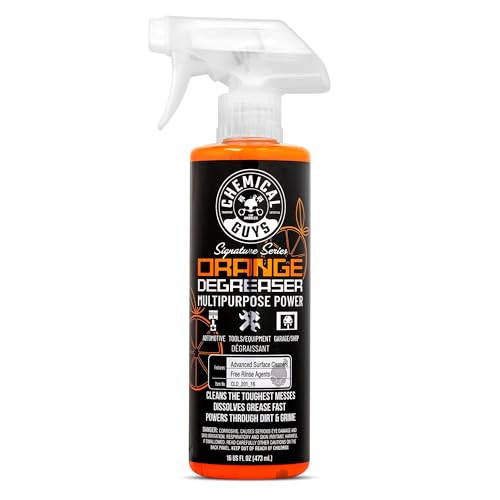
Best for: DIYers cleaning greasy engine bays
Chemical Guys Signature Series Orange Degreaser is a heavy-duty cleaner in a 16-ounce spray bottle. It targets grease, oil, road grime, and dirt on engines, wheels, tires, undercarriages, tools, and shop equipment. The formula works on cars, trucks, SUVs, motorcycles, and RVs, so one bottle can cover several garage jobs. Use it full strength for stubborn buildup, or dilute it for lighter cleaning. Spray, scrub, then rinse.
The main draw is flexibility. This cleaner is not limited to engine bays, and the citrus scent may feel more pleasant than a plain solvent smell. Scent preference varies, though. It can restore the cleaner look of greasy parts and tools without requiring a separate product for every surface. At around $12, the price is reasonable for a specialty cleaner, but 16 ounces is a modest amount for large vehicles or frequent use. Treat it as a concentrated detailing chemical, not a casual all-purpose spray. Check the label and test an inconspicuous area first, especially on painted, coated, or sensitive surfaces.
Pros
- Full-strength use helps break down stubborn grease, oil, and road grime.
- Dilution lets you adjust it for lighter cleaning tasks.
- Spray application works across engines, tires, tools, and undercarriages.
Cons
- The 16-ounce bottle may run out quickly during large or repeated jobs.
- Heavy-duty formulas require careful use, thorough rinsing, and surface testing.
1. KRAKEN BOND Engine Cleaner Spray
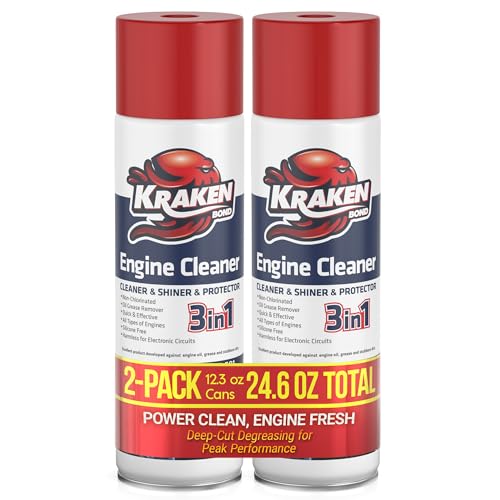
Best for: Cleaning grimy, cool engine bays
KRAKEN BOND Engine Cleaner Spray is a two-pack degreaser for under-hood grime, burned oil, and dirt baked onto engine covers. Each bottle holds 12.3 fluid ounces, giving you 24.6 ounces total. It suits cars, motorcycles, lawnmowers, and other small machines. At around $21, the pair costs less than many specialty detailing products.
Use it only on a cool engine. Spray the dirty area, then work the residue with a microfiber towel. That simple process can handle normal buildup around valve covers and engine covers. The formula is also described as safe for electronic circuits and uses ozone-friendly propellants. Still, heavy deposits may need repeated applications and more towel work. This is a cleaner for maintenance jobs, not a replacement for mechanical repairs or leak fixes.
Pros
- Two 12.3-ounce bottles provide 24.6 ounces of cleaner for multiple vehicles or maintenance sessions.
- Helps loosen burned oil, dirt, and grime around valve covers and engine covers.
- Suitable for cars, motorcycles, lawnmowers, and other engine types.
Cons
- You must wait for the engine to cool before use, which rules out quick cleaning after driving.
- Tough, baked-on residue may require repeated sprays and manual scrubbing with a microfiber towel.
Buying Guide
The most important factor is material compatibility. A strong degreaser can damage aluminum, rubber hoses, plastic covers, paint, or electrical coatings if its formula is too harsh.
- Surface safety: Choose a formula labeled safe for aluminum, rubber, plastic, and painted parts. Avoid products that warn against more than one engine material.
- Cleaning strength: For routine dust and oil film, use a water-based cleaner. For thick grease, choose a heavy-duty formula, but avoid highly caustic products with a pH above 12 unless the label gives clear engine guidance.
- Application method: A trigger bottle offers better control around wiring and sensors. Foaming sprays cling longer, while a narrow nozzle helps reach gaps near brackets and pulleys.
- Rinse requirements: Pick a low-residue formula if rinsing is difficult. If water is required, use a small stream and keep it away from alternators, fuse boxes, air intakes, and exposed connectors.
- Size and value: A 20- to 32-ounce bottle suits one or two cleanings. Prices around $8 to $15 are common, while concentrated refills can cost less per use.
If you cannot have everything, prioritize surface compatibility and clear safety instructions over maximum cleaning power.
Frequently Asked Questions
How do engine cleaner sprays work?
Engine cleaner sprays loosen oil, grease, and road grime so you can rinse or wipe them away. Most formulas need 5 to 10 minutes of dwell time, but they should not dry on hot metal. Choose a product labeled for engines, and follow its dilution or rinsing directions.
What should I look for in an engine degreaser?
Look for a degreaser labeled for engine bays, with clear surface warnings and easy rinse instructions. A trigger bottle, foam nozzle, or concentrated formula can suit different jobs. For light dirt, a ready-to-use cleaner is simpler; heavy deposits may need a stronger formula and a second application.
Can engine cleaners damage electrical parts?
Yes, engine cleaners can damage alternators, exposed wiring, rubber, or painted surfaces if sprayed carelessly. Keep the product away from electrical connectors and air intakes, and rinse promptly instead of letting residue sit. A 5-to-10-minute dwell time is common, but always follow the label.
Are engine cleaning sprays safe for aluminum and plastic?
They are usually safe for aluminum and many plastics when the label approves those materials, but compatibility varies by formula. Test a small hidden area first, keep contact under 10 minutes, and rinse thoroughly. Avoid strong solvents on rubber seals, hoses, or freshly painted parts unless listed as compatible.
Conclusion
KRAKEN BOND Engine Cleaner Spray is the top recommendation for drivers who want a practical cleaner for greasy engine-bay parts, routine under-hood maintenance, and occasional buildup removal without buying a large workshop container. If your priority is heavy carbon, baked-on oil, or frequent professional-style cleaning, choose a stronger degreaser in a larger bottle instead, since a compact aerosol may require repeated applications and cost more per ounce. Before buying, double-check the container size, surface compatibility, safe use around rubber, plastic, and electrical parts, the number of cans included, and the current price, since listings, bundle contents, and discounts can change.