
Chemical Guys Signature Series Orange Degreaser Spray is the top pick for most buyers because its concentrated formula handles grease, oil, and road grime across a typical engine bay. It earns our best engine bay cleaner spot for its broad cleaning range and flexible dilution options. Use it full strength on stubborn buildup or dilute it for lighter maintenance, while following the label and avoiding hot surfaces.
This guide is for drivers who want cleaner engine compartments without damaging rubber, plastic, painted metal, or electrical components. The key factors are dilution control, surface safety, bottle size, and how much cleaner each job requires. A strong formula can save money, but it also needs careful use around sensitive parts. The 7 picks below are ranked with clear reasons and honest drawbacks for each.
Quick Comparison
| # | Product | Best For | Price | |
|---|---|---|---|---|
| 1 | Chemical Guys Signature Series Orange Degreaser Spray | DIY car owners needing grease removal | ~$12 | View → |
| 2 | DURA-COATING TECHNOLOGY DDE Detailer & Engine Bay Cleaner | Detailers cleaning modern engine bays | ~$48 | View → |
| 3 | KRAKEN BOND Engine Cleaner Spray | Quick spray-on engine cleanup | ~$21 | View → |
| 4 | 3D Grand Blast Engine Degreaser | Heavy-duty workshop degreasing jobs | ~$37 | View → |
| 5 | Griot's Garage 20244 Engine Bay Dressing | Restoring shine to plastic engine covers | ~$18 | View → |
| 6 | CRC Heavy Duty Degreaser Spray | Mechanics tackling baked-on shop grime | ~$9 | View → |
| 7 | Griot's Garage 11158 Engine Cleaner | Routine maintenance for older vehicles | ~$35 | View → |
7 Top Engine Bay Cleaner Picks
These engine bay cleaners are ranked from seventh place down to the top pick for easier comparison.
7. Griot’s Garage 11158 Engine Cleaner

Best for: Large, dirty engine bays and undercarriages
Griot’s Garage Engine Cleaner comes in a one-gallon container for cleaning car, motorcycle, boat, RV, and truck components. It targets oil, grease, dirt, and general grime around engine compartments, wheel wells, and undercarriages. The size suits regular detailing or multiple vehicles better than a small bottle. At around $35, it also offers a practical option for owners who need more than one engine-bay cleaning session.
The cleaning process stays simple: spray the degreaser onto the dirty area, agitate buildup with a brush, then wipe away the loosened residue. That approach can reduce heavy hand scrubbing on greasy surfaces. Its broader use is the main draw, since one cleaner can handle engine components and other grimy areas around a vehicle. Griot’s Garage also lists compatibility with its Citrus Multi-Surface Cleaner for especially neglected engine bays. Still, results depend on the thickness of the buildup and the care used around sensitive components. It is a cleaning chemical, not a complete detailing system.
Pros
- One-gallon size supports repeated use across cars, motorcycles, boats, RVs, and trucks.
- Designed to break down oil, grease, and grime before wiping.
- Works on engine bays, wheel wells, and undercarriages.
Cons
- The gallon container may be excessive for owners cleaning one engine bay once or twice.
- Heavy buildup still calls for a brush and extra cleaning effort, despite the reduced need for hard scrubbing.
6. CRC Heavy Duty Degreaser Spray

Best for: Greasy automotive parts and machinery
CRC Heavy Duty Pro-Strength Degreaser is a foaming, water-based cleaner in a 20 weight-ounce aerosol can. It targets oil, grease, and grime across automotive parts, maintenance equipment, heavy machinery, and household tools. The formula also suits vehicle interiors and exteriors, painted surfaces, chrome, stainless steel, and other metal components. At around $9 per can, it costs less than many specialty cleaners, though prices can change.
The main draw is its broad material range and low-odor formula. A foam can cling to vertical parts longer than a thin spray, which may help keep cleaner on dirty areas instead of letting it run off at once. CRC positions this product as aggressive on buildup without the harsh chemical smell common with some degreasers. Still, “no odor” does not mean risk-free, so follow the label and use suitable ventilation. Single cans fit occasional garage jobs, while the 12-can case makes more sense for shops, fleets, or regular maintenance. The aerosol format is convenient, but it gives less control over quantity than a refillable pump sprayer.
Pros
- Water-based foam works across metal, painted surfaces, and equipment.
- Low-odor formula is more comfortable for indoor maintenance areas.
- 20-ounce aerosol size is easy to store and carry.
Cons
- Aerosol cans create more packaging waste than bulk refill options.
- The 12-can case may be excessive for occasional household use.
5. Griot’s Garage 20244 Engine Bay Dressing

Best for: DIY engine bay refreshes
Griot’s Garage Engine Bay Dressing is a 12.5-ounce spray for cleaning up the look of an engine compartment after the surfaces are already clean. It works across the materials and finishes commonly found under the hood, including plastic and rubber components. The formula is intended to restore a darker, factory-style appearance while helping reduce fading, discoloration, and cracking over time. At around $18, it costs more than a basic household protectant, but the bottle is made for automotive detailing.
What separates this dressing from greasy alternatives is the finish. A light coat dries smooth and touchable instead of leaving an oily film that collects dust and grime. That can make later engine-bay cleaning less frustrating. Application is simple: spray an even layer across the cleaned surfaces, then leave it at a satin finish or add coats for more shine. The product can cover a typical engine bay in minutes, though larger compartments may use more spray. It is a visual refresh, not a degreaser, so heavy dirt must be removed first. The final look also depends on how evenly each coat is applied.
Pros
- Dry-to-the-touch finish is less likely to attract dust than oily dressings.
- Suitable for plastic, rubber, and other engine-compartment surfaces.
- Light coats create a satin finish, while added coats increase gloss.
Cons
- It does not replace an engine-bay cleaner, so surfaces need preparation first.
- Achieving an even glossy finish may require extra coats and careful spraying.
4. 3D Grand Blast Engine Degreaser

Best for: DIY engine bay and wheel cleaning
3D Grand Blast is a heavy-duty degreaser sold in a one-gallon container. It targets baked-on oil, grease, and road grime on engine bays, wheel wells, undercarriages, exhaust parts, and other automotive surfaces. The formula is listed as suitable for metal, plastic, painted areas, and rubber, so one cleaner can cover several parts of a vehicle. It is made in the USA and comes from a brand with more than 25 years in automotive detailing.
Its biggest draw is speed. The cleaner is designed to break down grime on contact, then rinse away without a sticky film or visible staining. A low-odor formula may make garage work more comfortable than harsher solvent cleaners. The product is also described as biodegradable and environmentally friendlier, though buyers should still follow the label and local disposal rules. At around $37, the gallon size offers a practical supply for frequent detailers, but costs more upfront than a small spray bottle.
Pros
- Cuts through caked-on oil, grease, and road grime with limited scrubbing.
- Works on listed surfaces including metal, plastic, paint, rubber, wheels, and exhaust parts.
- One-gallon size suits repeated vehicle cleanups and professional detailing work.
Cons
- The large container needs more storage space and may be excessive for occasional users.
- Product details do not specify dilution ratios, coverage, or required contact time.
3. KRAKEN BOND Engine Cleaner Spray
Best for: Cleaning a cool, greasy engine bay
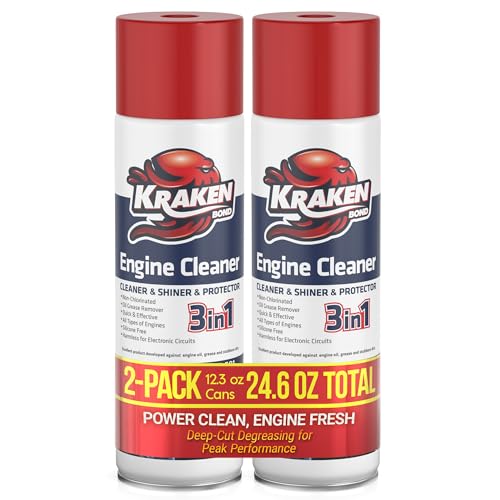
KRAKEN BOND Engine Cleaner Spray is a two-pack of 12.3-fluid-ounce cans made for dirty engine bays. It targets burned oil near valve covers, cooked-on grime around engine covers, and general buildup on motors. The spray suits cars, motorcycles, lawnmowers, and other machinery. At around $21, it offers a practical amount for routine maintenance or several smaller cleaning jobs.
Use it only on a completely cool engine. Spray the dirty area, then work stubborn deposits with a microfiber towel. That simple process should handle light and moderate grime, while heavier buildup may need more wiping. The product claims compatibility with electronic circuits and uses ozone-friendly propellants, but careful application still makes sense around connectors and exposed electrical parts. Its main advantage is convenience, not a specialized tool or long dwell time. The package includes cleaner, not a brush or towel.
Pros
- Two 12.3-ounce cans provide useful supply for repeated cleaning.
- Removes burned oil and baked-on dirt around engine components.
- Works across cars, motorcycles, lawnmowers, and other machinery.
Cons
- The engine must be fully cool before spraying, which adds waiting time.
- A microfiber towel or brush is needed for stubborn deposits, and neither is included.
2. DURA-COATING TECHNOLOGY DDE Detailer & Engine Bay Cleaner

Best for: DIY engine bay and trim detailing
This combo pairs two 16-ounce bottles for separate jobs. The DDE Spray Detailer is a water-based dressing for plastic and rubber surfaces inside or outside the vehicle. It dries to a high-luster finish without the oily feel common with some dressings. Its safe-use list is narrow, though. Keep it off seats, LCD screens, clear dashboard plastics, pedals, floor mats, and steering wheels.
The No Touch Engine Bay Cleaner works as a spray-and-rinse degreaser. Dilute one part cleaner with three parts water for newer engine bays, making up to 48 ounces of usable solution. Full-strength use is intended for older bays with baked-on oil and heavier grime. That dilution guidance gives buyers more control over cleaning strength and product use. Both products are made in the USA. At around $48, the set costs more than a single interior or engine cleaner, but it covers trim dressing and under-hood cleanup in one purchase.
Pros
- Water-based dressing adds shine to plastic and rubber without a greasy finish.
- Three-to-one dilution can produce up to 48 ounces of engine cleaner.
- Full-strength formula targets heavy grease and baked-on oil in older engine bays.
Cons
- The detailer cannot be used on seats, screens, pedals, mats, or steering wheels.
- Around $48, the combo costs more than buying one cleaner for a single task.
1. Chemical Guys Signature Series Orange Degreaser Spray
Best for: Engine bays and greasy shop tools
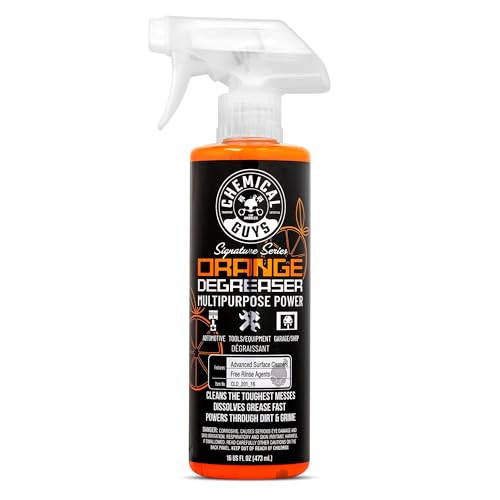
Chemical Guys Signature Series Orange Degreaser is a 16-ounce spray cleaner for breaking down oil, grease, road grime, and dirt. It targets engines, wheels, tires, undercarriages, garage tools, and shop equipment. The formula can be used full strength for heavy buildup or diluted for lighter cleaning. For the basic process, spray the surface, scrub stubborn areas, then rinse.
Its main advantage is flexibility. One bottle can cover several automotive cleaning tasks instead of focusing on a single part of the vehicle. The product also leaves a citrus scent, which may make engine-bay and tool cleanup more pleasant than using a harsh-smelling cleaner. Around $12, it is reasonably priced for occasional maintenance, though frequent detailers may use the 16-ounce bottle quickly. Buyers should still confirm surface compatibility and follow the label before applying it to unfamiliar materials.
Pros
- Works on engines, tires, wheels, undercarriages, and tools.
- Full-strength and diluted use suit heavy or light cleaning.
- Citrus scent is fresher than many industrial degreasers.
Cons
- The 16-ounce size may run out quickly during multiple-vehicle jobs.
- Heavy buildup still requires scrubbing and rinsing, not just spraying.
Buying Guide
Formula safety matters most when choosing an engine-bay degreaser. A product that cuts oil but damages rubber, plastic, aluminum, or wiring can cost far more than the cleaner itself.
- Material compatibility: Choose a formula labeled safe for aluminum, plastic, rubber, and painted surfaces. Avoid products that warn against electrical connectors or bare metal.
- Cleaning strength: For light dust, use a ready-to-use spray. For heavy oil, choose a concentrate with a dilution range, such as 1:4 for grease and 1:10 for routine cleaning.
- pH level: A pH between 7 and 10 suits most maintenance jobs. Stronger alkaline formulas above pH 11 may require shorter contact times and extra rinsing.
- Application and rinsing: Pick a foaming trigger that covers roughly 2 to 4 square feet per spray pattern. The label should explain whether rinsing is required and how long the product may sit.
- Bottle size and cost: A 24- to 32-ounce ready-to-use bottle works for one or two cleanups. A 1-gallon concentrate usually offers better value for frequent detailing, often below $30.
If you cannot have everything, prioritize material compatibility over maximum grease-cutting power.
Frequently Asked Questions
How do I choose an engine bay cleaner?
Choose an engine bay cleaner based on the dirt type, surface safety, dilution needs, and application method. A water-based degreaser suits routine oil film, while a stronger solvent formula handles baked-on grease but needs more caution. Check the label before using it on aluminum, rubber, plastic, or painted parts.
What is the safest cleaner for an engine bay?
The safest engine bay cleaner is a pH-balanced, water-based degreaser labeled safe for plastic, rubber, painted metal, and aluminum. Use it on a cool engine, spray a small hidden area first, and rinse lightly. A 1:10 dilution works for light dust, while heavy grease may require a 1:4 mix if approved.
Can I use household cleaner to wash an engine compartment?
You can use a household cleaner only when its label permits automotive engine-bay use and confirms compatibility with metal, plastic, rubber, and wiring. Avoid bleach, ammonia, and highly acidic products. For example, a dedicated degreaser diluted 1:10 is usually a safer choice for routine dust and oily residue.
Are spray-on degreasers safe for car engines?
Spray-on degreasers are safe for car engines when used on a cool surface, kept away from electrical connectors, and rinsed or wiped according to the label. Cover exposed filters and alternators, use a soft brush, and work in small 12-inch sections. Never let the product dry on aluminum or painted surfaces.
Conclusion
Chemical Guys Signature Series Orange Degreaser Spray is the top recommendation for drivers who want a versatile cleaner for routine engine-bay grime, oil film, and road dust. If your priority is maximum strength on neglected, greasy parts, choose a dedicated heavy-duty degreaser instead, but plan to dilute it and protect sensitive finishes as directed. Before buying, double-check the bottle size, surface compatibility, available quantity, and current price, since package sizes and seller listings can change. Apply any cleaner to a cool engine, cover exposed electrical components, and rinse with controlled water pressure. Give plastic, rubber, and painted surfaces a small test area first. Good prep helps prevent stains, residue, and unnecessary replacement costs.