
Chemical Guys Signature Series Orange Degreaser Spray is the top pick for most buyers and the best automotive engine cleaner because its concentrated formula handles oily grime across an engine bay. It is a versatile, water-based degreaser for grease, road film, and buildup on many vehicle surfaces. Still, users should follow the label and avoid sensitive electrical parts, hot components, and unprotected finishes.
This guide is for DIY car owners, weekend detailers, and anyone cleaning an older vehicle without replacing parts. The key factors are cleaning strength, dilution options, bottle capacity, and surface compatibility. A strong degreaser saves time, but a harsh formula can damage painted or delicate areas. The 5 picks below are ranked with clear reasons and honest drawbacks for each.
Quick Comparison
| # | Product | Best For | Price | |
|---|---|---|---|---|
| 1 | Chemical Guys Signature Series Orange Degreaser Spray | Citrus-Scented Garage Cleanup | ~$12 | View → |
| 2 | Zep Cherry Bomb Degreaser & Cleaner | Cherry-Scented Workshop Degreasing | ~$6 | View → |
| 3 | 3D Grand Blast Engine Degreaser | Engine Bay Maintenance | ~$37 | View → |
| 4 | CRC Heavy Duty Degreaser Spray | Heavy-Duty Mechanical Parts Cleaning | ~$9 | View → |
| 5 | Chemical Guys Nonsense All-Purpose Cleaner | Sensitive-Surface Interior Cleaning | ~$10 | View → |
5 Top Engine Cleaner Picks
Here’s our ranked selection of five engine cleaners, counting down to the top pick for different engine cleanup needs.
5. Chemical Guys Nonsense All-Purpose Cleaner

Best for: Odor-sensitive car interior maintenance
Chemical Guys Nonsense is a colorless, odorless all-purpose cleaner for vehicle interiors and selected exterior areas. This 16-ounce bottle is intended for vinyl, rubber, plastic, carpet, upholstery, rubber mats, dashboards, trim, cup holders, and engine-bay components. The concentrated formula can be diluted for different cleaning jobs, which may help stretch the bottle beyond heavier-duty applications. At around $10, it costs little to add to a regular detailing supply kit.
Its biggest advantage is the lack of fragrance. That suits drivers who dislike strong chemical smells, especially when cleaning enclosed cabins. The cleaner targets dirt, grime, residue, and some stains without adding color or a noticeable scent. It is described as low-foam, but its foaming action still helps work across textured plastics, fabric, and other uneven surfaces. Spray-and-wipe use keeps the process simple, though difficult stains may need repeated applications and agitation. Surface compatibility is broad, but a small hidden-area test remains sensible before treating delicate upholstery or unfamiliar materials.
Pros
- Odorless and colorless, making it suitable for fragrance-sensitive vehicle owners.
- Works across vinyl, rubber, plastic, carpet, upholstery, and some engine-bay surfaces.
- Concentrated formula allows dilution for lighter cleaning tasks.
Cons
- The 16-ounce size may run out quickly for large SUVs, work trucks, or frequent detailing.
- Tough stains and embedded grime may require brushing, repeat applications, or a stronger dedicated cleaner.
4. CRC Heavy Duty Degreaser Spray

Best for: mechanics and greasy equipment cleanup
CRC Heavy Duty Pro-Strength Degreaser is a foaming, water-based aerosol for removing grime from automotive parts, machinery, tools, and maintenance equipment. The 20 wt. oz. can gives you a practical amount for routine shop or garage work. It is also listed for painted surfaces, chrome, stainless steel, vehicle interiors, and exteriors. That broad material range makes it more useful than a cleaner made only for bare metal.
The formula is designed to cut heavy buildup without the harsh chemical odor found in some degreasers. Its foam can help cling to vertical surfaces instead of running off immediately, though the product still needs wiping or rinsing after use. At around $9 per can, it fits occasional cleanup budgets, while the 12-can case makes more sense for busy garages, maintenance teams, or industrial storage. Use care on unfamiliar finishes, since a cleaner suitable for chrome or stainless steel may still need a spot test on painted or delicate surfaces.
Pros
- Water-based foam works across automotive parts, tools, machinery, and several vehicle surfaces.
- No-odor formula avoids the strong chemical smell common with some degreasers.
- Available in a 20 wt. oz. aerosol, with 12 cans per case for regular shop use.
Cons
- Aerosol packaging creates empty cans and is less convenient for large-area cleaning than a bulk liquid.
- It is not a spray-and-forget product. Heavy grease may still require wiping, rinsing, or repeat applications.
3. 3D Grand Blast Engine Degreaser

Best for: DIY engine-bay and wheel cleaning
3D Grand Blast is a heavy-duty degreaser sold in a 1-gallon container. It targets baked-on oil, grease, and road grime in engine bays, wheel wells, undercarriages, exhaust areas, and other hard-working vehicle surfaces. The formula is described as biodegradable, low odor, non-staining, and made in the USA. At around $37, it costs more upfront than a small spray bottle, but the larger quantity suits repeated cleaning.
What stands out is its broad material compatibility. The manufacturer says it is safe for metal, plastic, painted surfaces, and rubber, which covers many parts around a vehicle. It is also designed to work on contact and rinse away without residue, reducing the need for extended scrubbing. That makes it useful for quick maintenance, especially when grease has spread across several parts. Still, “heavy duty” does not mean every surface needs the same treatment. Protect delicate finishes, avoid letting cleaner dry, and follow the label directions. The product details do not state a dilution ratio, spray pattern, or exact shelf life, so buyers may need to check the container before planning larger jobs.
Pros
- One gallon provides enough cleaner for repeated engine, wheel, and undercarriage work.
- The stated compatibility includes metal, plastic, paint, and rubber.
- Fast contact action and clean rinsing can reduce scrubbing time.
Cons
- A gallon takes more storage space and may be excessive for occasional users.
- No dilution instructions or coverage estimate are provided in the listing, making per-job cost harder to predict.
2. Zep Cherry Bomb Degreaser & Cleaner

Best for: Garage and vehicle cleanup
Zep Cherry Bomb Auto+ Degreaser & Cleaner is a 32-ounce liquid cleaner for cutting through oil, grease, dirt, and grime. Its formula is intended for fiberglass, steel, chrome, stainless steel, painted metal, rubber, and finished concrete. That broad surface range makes it useful for more than car care. Around $6, it also costs less than many specialty cleaners.
The cleaner fits jobs around cars, boats, RVs, grills, appliances, garage doors, and shop tools. It can also handle trash cans, garage floors, and other utility areas where greasy residue builds up. The cherry fragrance is a notable feature, since it helps cover harsh smells after cleanup. Still, the scent may feel strong in enclosed spaces. Read the label before using it on unfamiliar finishes, and avoid assuming that every painted or coated surface will react the same way.
Pros
- 32 ounces provides a practical amount for vehicle, garage, and household tasks.
- Works across metal, fiberglass, rubber, and finished concrete surfaces.
- Cherry fragrance helps reduce lingering odors after degreasing.
Cons
- The bold cherry scent may be unpleasant for people who prefer fragrance-free cleaners.
- A 32-ounce bottle may run out quickly during large garage, boat, or RV cleanups.
1. Chemical Guys Signature Series Orange Degreaser Spray
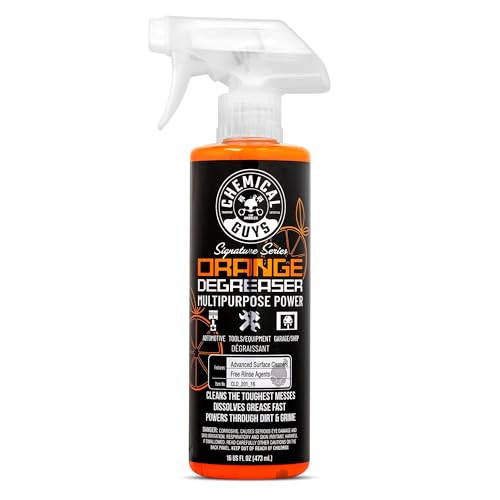
Best for: Degreasing engines, tires, and tools
This 16-ounce spray is a concentrated automotive degreaser for grease, oil, road grime, and dirt. It is designed for engine bays, wheels, tires, undercarriages, garage tools, and shop equipment on cars, trucks, SUVs, motorcycles, and RVs. Use it full strength for stubborn buildup, or dilute it for lighter cleaning. The process is straightforward: spray, scrub, and rinse. At around $12, it costs less than many larger detailing products, but the small bottle may not last through several big cleaning jobs.
The main draw is its broad surface range and heavy-duty formula. The orange-based cleaner targets oily deposits, while its citrus scent leaves a fresher smell after use. It can restore the appearance of dirty metal and plastic parts, but it is not a no-effort solution. Thick grime may need scrubbing and a second pass. The product details do not list a specific dilution ratio, so buyers must choose the mix for each task. Careful rinsing also matters, especially when cleaning around an engine bay.
Pros
- Works on engines, wheels, tires, undercarriages, tools, and shop equipment.
- Can be used full strength or diluted for lighter cleaning.
- Citrus scent makes the cleanup area smell fresher.
Cons
- The 16-ounce bottle may run out quickly during large vehicle or shop jobs.
- Heavy buildup can require scrubbing, repeated applications, and thorough rinsing.
Buying Guide
The most important factor is material compatibility. An engine-bay degreaser must remove oil without damaging aluminum, rubber hoses, plastic covers, wiring insulation, or painted surfaces.
- Surface safety: Choose a label that specifically lists aluminum, rubber, plastic, and painted parts. Avoid formulas intended only for bare metal.
- Cleaning strength: A pH-neutral or mildly alkaline formula, around pH 7 to 10, suits routine dust and oil. Heavy grease may require a stronger concentrate.
- Dilution and coverage: Ready-to-use bottles usually hold 24 to 32 ounces. Concentrates should make at least 1 gallon after dilution for better value on multiple vehicles.
- Application method: Look for a trigger sprayer or foam nozzle and a stated dwell time of 5 to 10 minutes. The directions should recommend low-pressure rinsing near alternators and connectors.
- Price and storage: Expect to pay about $8 to $15 for a consumer-size bottle. A 24-ounce spray works for occasional cleaning, while a gallon container suits regular maintenance.
If you cannot have everything, prioritize a formula proven safe for every material under your hood.
Frequently Asked Questions
How do you choose an engine cleaner for your car?
Choose an engine cleaner by matching its formula to the engine surface, dirt level, and cleaning method you plan to use. Water-based degreasers suit routine grime, while solvent-heavy formulas cut thick oil more aggressively. Check the label for rubber, plastic, aluminum, and painted-surface compatibility before spraying.
What makes an automotive degreaser safer to use?
A safer engine degreaser uses a nonflammable, low-odor formula that will not attack common plastics, hoses, seals, or aluminum when used as directed. Look for dilution guidance, ventilation instructions, and a stated dwell time, such as 3 to 5 minutes, before rinsing.
Can you use a household cleaner on an engine?
You can use some household cleaners on an engine, but an automotive-specific product is usually safer because its label addresses grease, metal, rubber, and plastic parts. Avoid bleach and highly acidic formulas. Keep water away from electrical connectors, and rinse only when the product permits it.
Are spray engine cleaners safe for modern vehicles?
Spray engine cleaners are generally safe when the engine is cool, electrical parts are covered, and the label allows rinsing. Never spray a hot engine or alternator directly. A 10- to 15-minute cool-down, plus low-pressure water, reduces risk during routine cleaning.
Conclusion
Chemical Guys Signature Series Orange Degreaser Spray is the top pick for drivers who want a versatile cleaner for routine engine-bay grime, grease, and road film. If your priority is tackling heavy buildup with less scrubbing, choose a heavy-duty concentrate that lets you adjust dilution for each job. Before buying, double-check the bottle size, compatibility with painted surfaces, rubber, plastic, and aluminum, the quantity included, and the current price. Also follow basic precautions: work on a cool engine, protect electrical connections, and rinse only as directed. A good engine cleaner should match your cleaning workload, storage space, and comfort level with dilution and rinsing.