
Chemical Guys Signature Series Orange Degreaser Spray is the top pick for most buyers and the best car engine cleaner. Its citrus-based formula is the main draw, cutting through oily buildup while also working on other grimy vehicle surfaces.
This guide is for DIY detailers, commuters, and anyone cleaning an engine bay before maintenance or a sale. The key factors are grease-cutting strength, surface compatibility, spray control, and bottle size, since overspray can reach belts, wiring, and painted parts. The six picks below are ranked with clear reasons and honest drawbacks for each, so you can match a degreaser to the mess, materials, and cleaning frequency involved.
Quick Comparison
| # | Product | Best For | Price | |
|---|---|---|---|---|
| 1 | Chemical Guys Signature Series Orange Degreaser Spray | Heavy-Duty Garage Grease Removal | ~$12 | View → |
| 2 | Zep Cherry Bomb Auto+ Degreaser & Cleaner | Mechanics’ Shop Cleaning Jobs | ~$6 | View → |
| 3 | Gunk Engine Cleaner Foamy Spray | Foaming Engine Bay Cleaning | ~$31 | View → |
| 4 | 3D Grand Blast Engine Degreaser | Large Engine Degreasing Projects | ~$37 | View → |
| 5 | P21S 13001B Auto Wash with Sprayer | Gentle Exterior Vehicle Washing | ~$42 | View → |
| 6 | Chemical Guys Nonsense All-Purpose Cleaner | Odor-Free Interior Surface Cleaning | ~$10 | View → |
6 Top Car Engine Cleaner Picks
These engine cleaners are ranked by cleaning focus, ease of use, and value, counting down to the top pick.
6. Chemical Guys Nonsense All-Purpose Cleaner

Best for: Odor-sensitive interior detailing
Chemical Guys Nonsense is a colorless, odorless all-purpose cleaner for car interiors and selected exterior areas. The 16-ounce bottle is designed for vinyl, rubber, plastic, carpet, upholstery, floor mats, dashboards, trim, cup holders, and some engine-bay surfaces. Its concentrated formula can be diluted for different cleaning jobs, while the low-foam design helps limit residue during spray-and-wipe use.
The main advantage is flexibility. One cleaner can handle routine grime on hard surfaces and messes on fabric, without adding fragrance to the cabin. It also works on textured trim and high-touch areas where dirt collects. The formula is intended to remove dirt, residue, and stains, but results can depend on dilution, surface condition, and agitation. Around $10, the bottle costs less than many specialty detailing products, though the small size may not last long for frequent whole-vehicle cleaning.
Pros
- Odorless and colorless, so it will not add fragrance or visible color to the interior.
- Suitable for vinyl, rubber, plastic, carpet, and upholstery.
- Concentrated formula allows dilution for lighter or heavier cleaning tasks.
Cons
- The 16-ounce size may run out quickly when cleaning multiple vehicles or large interiors.
- Stubborn stains and textured grime may require brushing or repeated applications, rather than a single spray-and-wipe pass.
5. P21S 13001B Auto Wash with Sprayer

Best for: Drivers cleaning dirty daily vehicles
P21S 13001B is an automotive wash cleaner supplied in a white bottle with a sprayer. Its 1,000 ml capacity provides a practical amount for regular vehicle care, while the 1.225-kilogram package weight may matter when storing or carrying it. The sprayer should make it easier to apply cleaner directly to problem areas instead of pouring it into another container.
Its main strength is flexibility. The formula is designed for general cleaning tasks and for removing tougher stains, so it may help with more than light dust. A fresh orange scent gives it a less harsh-smelling profile than some strong cleaning products. At around $42, it sits in a higher price range for a single one-liter bottle. Buyers should still follow the label directions and confirm surface compatibility before using it on unfamiliar finishes.
Pros
- The 1,000 ml bottle offers enough cleaner for repeated washes.
- The sprayer allows targeted application on dirty sections.
- Orange fragrance may make vehicle cleaning more pleasant.
Cons
- One liter may run out quickly when cleaning multiple vehicles or heavily soiled cars.
- Around $42 is a significant cost for a single automotive cleaner.
4. 3D Grand Blast Engine Degreaser

Best for: Degreasing dirty engine bays and wheels
3D Grand Blast is a heavy-duty automotive degreaser sold in a 1-gallon container. It targets baked-on oil, grease, and road grime across engine bays, wheel wells, undercarriages, exhaust tips, and similar areas. The formula is made for fast cleanup, helping loosen dirt on contact so you can spend less time scrubbing.
Its broad surface compatibility makes it more useful than a product limited to bare metal. The manufacturer lists metal, plastic, paint, and rubber as suitable surfaces, with a non-staining formula that rinses without leftover residue. It also has a low odor and is described as biodegradable, which may appeal to detailers who want stronger cleaning with fewer environmental concerns. Made in the USA and backed by more than 25 years of detailing experience, it costs around $37. That price is reasonable for a gallon, especially for frequent vehicle care, but less attractive for occasional light cleaning.
Pros
- Breaks down heavy oil, grease, and grime quickly.
- Works on metal, plastic, paint, and rubber.
- One gallon provides a practical supply for repeated detailing jobs.
Cons
- The gallon container takes storage space and may be excessive for occasional users.
- Product details do not list a dilution ratio, which limits guidance for adjusting cleaning strength.
3. Gunk Engine Cleaner Foamy Spray

Best for: Routine engine-bay cleaning and maintenance
Gunk Engine Cleaner is a foaming spray made for dirty engine bays, especially those with plastic covers. Each 17-ounce can expands across vertical surfaces, where the foam clings to oil, dust, and road grime instead of running off immediately. The case includes six cans and costs around $31, though prices can change.
The cleaner is designed for plastic covers, under-hood rubber, and painted areas. Let it sit for 10 to 15 minutes, then rinse with a water hose. That simple process makes it useful for cars, trucks, motorcycles, ATVs, boats, RVs, mowers, and farm equipment. The foam format is the main advantage. It can reach tight spaces and exposed vertical panels better than a thin liquid spray. Gunk also has more than 60 years in engine-care products, which may appeal to buyers who want a familiar brand. Still, heavy buildup may need extra passes and brushing.
Pros
- Clinging foam reaches vertical panels and narrow engine-bay gaps.
- Designed for plastic covers, under-hood rubber, and painted surfaces.
- Six 17-ounce cans provide a useful supply for multiple vehicles or cleanups.
Cons
- A hose is required for rinsing, so it is less useful without outdoor water access.
- A six-can case may be excessive for owners who clean one engine bay once or twice a year.
2. Zep Cherry Bomb Auto+ Degreaser & Cleaner

Best for: Greasy vehicle and garage cleanup
Zep Cherry Bomb Auto+ Degreaser & Cleaner is a 32-ounce liquid cleaner for automotive, marine, RV, and household jobs. Its formula targets oil, grease, dirt, and grime, making it suited to messy work around engines, shop tools, grills, appliances, trash cans, garage doors, and utility areas. At around $6, it is a low-cost option for keeping one cleaner on hand.
The main draw is its material range. The product is intended for fiberglass, steel, chrome, stainless steel, painted metal, rubber, and finished concrete, so one bottle can cover many hard surfaces. It also leaves a cherry fragrance that helps cover harsh odors after cleaning. That scent may appeal to shoppers who dislike the smell of many degreasers. Still, “multi-surface” does not mean every finish is automatically safe. Painted or delicate surfaces deserve a small spot test first. The 32-ounce size is convenient for storage, but larger vehicles, boats, or heavily soiled garages may require multiple applications or bottles. Check the label for directions about dilution, dwell time, and rinsing before starting a large job.
Pros
- Handles oil, grease, dirt, and grime on demanding cleanup jobs.
- Works across fiberglass, steel, chrome, stainless steel, rubber, painted metal, and finished concrete.
- Covers vehicle, marine, RV, workshop, grill, appliance, and household cleaning needs.
Cons
- The bold cherry fragrance may be too strong for scent-sensitive users.
- A 32-ounce bottle may not last through large vehicles, boats, or extensive garage cleaning.
1. Chemical Guys Signature Series Orange Degreaser Spray
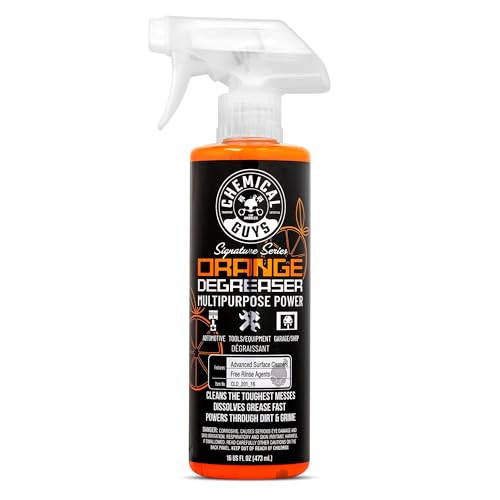
Best for: Engine bays, tires, and greasy tools
Chemical Guys Signature Series Orange Degreaser is a 16-ounce spray cleaner for heavy grease, oil, road grime, and dirt. It is made for engine bays, wheels, tires, undercarriages, garage tools, and shop equipment. The formula fits car, truck, SUV, motorcycle, and RV maintenance. At around $12, it costs little compared with many specialty cleaners.
Its main advantage is flexibility. Use it full strength on thick buildup, or dilute it for lighter cleaning jobs. The basic process is simple: spray, scrub, and rinse. That makes it useful for occasional driveway work and regular detailing. The orange scent is a pleasant change from harsher-smelling degreasers, although fragrance does not replace proper ventilation or surface care. This cleaner can restore the appearance of dirty metal and rubber parts, but results still depend on how long grime has accumulated and how much scrubbing the job requires.
Pros
- Works across engines, tires, wheels, undercarriages, tools, and shop equipment.
- Full-strength or diluted use covers heavy and light cleaning tasks.
- Orange scent makes routine degreasing less unpleasant.
Cons
- A 16-ounce bottle may not last long for large vehicles or repeated engine-bay cleaning.
- Heavy buildup still requires scrubbing and rinsing, so it is not a spray-and-wipe solution.
Buying Guide
The most important factor is formula compatibility with your engine’s materials. A degreaser that attacks aluminum, rubber, or plastic can cause more trouble than the oil and road grime it removes.
- Material safety: Choose a product labeled safe for aluminum, painted surfaces, rubber hoses, and plastic covers. Avoid formulas that require removing these parts first.
- Cleaning strength: For light dust and road film, a ready-to-use cleaner is usually enough. Heavy grease may need a concentrate mixed at 1:4 or 1:10 with water.
- Application method: A trigger spray gives better control around belts, wiring, and sensors than a wide aerosol. Pick a 16- to 32-ounce bottle for one engine bay.
- Rinsing and residue: Water-based formulas should rinse clean without an oily film. Use them on a cool engine, then keep spray away from alternators, air intakes, fuse boxes, and exposed connectors.
- Protection and value: Look for corrosion-inhibiting ingredients if the vehicle sees winter salt or coastal air. A $10 to $20 bottle with 32 ounces offers a practical starting point.
If you cannot have everything, prioritize material compatibility, because preventing damage matters more than removing every stain.
Frequently Asked Questions
How do I choose a car engine cleaner?
A good engine cleaner should match the engine’s materials, dirt level, and cleaning method. Look for a degreaser labeled safe for rubber, plastic, aluminum, and painted surfaces, then check dilution directions. A 1:5 concentrate can cover more jobs than a ready-to-use 16-ounce spray bottle.
What is the difference between engine degreaser and engine cleaner?
Engine degreaser targets heavy oil and grease, while engine cleaner usually handles lighter grime and general under-hood dust. For example, a concentrated degreaser may need dilution before use, while a spray cleaner can be applied directly. Read the label before using either product near belts, electrical connectors, or hot parts.
Can I use an engine cleaner on a hot car engine?
No, let the engine cool completely before applying an engine cleaner, because heat can dry the formula quickly and create fumes or surface damage. Many labels recommend a cool, shaded surface. Cover sensitive electrical components, avoid direct spraying, and rinse only when the product instructions permit it.
Are foaming engine cleaners better than spray cleaners?
Foaming engine cleaners are not automatically better; they mainly help the formula cling to vertical and greasy surfaces. A spray may work better for quick spot cleaning or tight areas. Compare dwell time, rinse requirements, and surface warnings. A product with a 3-to-5-minute dwell time may loosen stubborn grime.
Conclusion
Chemical Guys Signature Series Orange Degreaser Spray is the top recommendation for drivers who want a citrus-scented cleaner for routine engine-bay grime and a formula they can dilute for lighter or heavier jobs. If your priority is maximum value per ounce, choose a larger concentrate or refill instead, because it can cover more cleaning sessions than a ready-to-use bottle, provided the dilution directions match your vehicle and soil level. Before buying, double-check the bottle size, compatibility with painted surfaces, rubber, plastic, and aluminum, the quantity included in the listing, and the current price, since package sizes and seller offers can change from one retailer to another without notice.