
Chemical Guys Signature Series Wheel Cleaner Spray is the best powder coated wheel cleaner for most buyers because its pH-balanced formula suits multiple wheel finishes. It is made for alloy, painted, chrome, and powder-coated wheels, so one bottle can handle different vehicles and surface types. The spray targets brake dust, road film, and everyday grime without requiring a specialty formula for each finish. Heavy buildup may still need a soft brush and a second pass.
This guide is for drivers who want cleaner wheels without risking damage to the coating. The main factors are finish compatibility, bottle capacity, cleaning strength, and the amount of scrubbing needed. A larger bottle can reduce replacement costs, while a gentler formula may suit older or delicate finishes. The six picks below are ranked with clear reasons and honest drawbacks for each.
Quick Comparison
| # | Product | Best For | Price | |
|---|---|---|---|---|
| 1 | Chemical Guys Signature Series Wheel Cleaner Spray | Routine Wheel Maintenance | ~$11 | View → |
| 2 | P&S Professional Detail Products Brake Buster Wheel and Tire Cleaner | Brake Dust Removal | ~$37 | View → |
| 3 | Adam's Polishes Wheel & Tire Cleaner | Wheel And Tire Cleaning | ~$12 | View → |
| 4 | Meguiar's Hot Rims Aluminum Wheel Cleaner | Aluminum Wheel Owners | ~$9 | View → |
| 5 | Griot's Garage 11026 Heavy-Duty Wheel Cleaner | Heavy Grime Cleanup | ~$22 | View → |
| 6 | Griot's Garage 10973 Wheel Cleaner | Frequent Car Washers | ~$16 | View → |
6 Wheel Cleaners for Powder-Coated Rims
The list is ranked by cleaning power, finish safety, ease of use, and value, counting down to the top pick.
6. Griot’s Garage 10973 Wheel Cleaner

Best for: Frequent brake-dust cleanup on finished wheels
Griot’s Garage Heavy-Duty Wheel Cleaner is a 22-ounce spray made for painted, chromed, uncoated aluminum, powder-coated, and anodized wheels. Its pH-balanced, non-acidic, non-caustic formula targets brake dust and road grime without relying on harsh acids. The cleaner is made in the USA and costs around $16, though prices can change.
The spray clings to wheel surfaces for a recommended 3 to 5 minutes. As it reacts with brake dust, it changes to a deep purple color, giving you a clear visual cue that the formula is working. You still need to agitate the surface gently and rinse it away. The reformulated version contains more active ingredients than the prior formula and has a fresh scent designed not to linger. Its broad finish compatibility makes it useful for households with several wheel types, but the bottle is fairly small for repeated cleaning of multiple vehicles.
Pros
- Safe for painted, chrome, aluminum, powder-coated, and anodized wheels.
- Purple color change helps show where brake dust is breaking down.
- Non-acidic formula can clean without the harsher profile of acid-based products.
Cons
- The 22-ounce bottle may run out quickly on large wheels or multiple vehicles.
- Heavy buildup still requires gentle agitation, a 3 to 5 minute dwell time, and thorough rinsing.
5. Griot’s Garage 11026 Heavy-Duty Wheel Cleaner

Best for: Routine brake-dust cleaning on mixed-finish wheels
Griot’s Garage Heavy-Duty Wheel Cleaner is a 35-ounce spray for removing brake dust and road grime from vehicle wheels. Its pH-balanced, non-acidic, non-caustic formula works on painted, chrome, uncoated aluminum, powder-coated, and anodized finishes. Made in the USA, it suits drivers with several wheel types at home.
The color-changing formula turns deep purple as it reacts with brake dust, giving you a visible cue during cleaning. Apply it, let it sit for 3 to 5 minutes, gently agitate the surface, then rinse thoroughly. The reformulated version contains more active ingredients and has a fresh scent that should not linger. At around $22, the 35-ounce bottle costs more than basic household cleaners, but it is designed specifically for wheel finishes.
Pros
- Works across painted, chrome, aluminum, powder-coated, and anodized wheels.
- Purple color change helps identify areas reacting with brake dust.
- Non-acidic formula reduces concern about harsh chemical damage.
Cons
- The 35-ounce bottle may run short for multiple vehicles or frequent cleaning.
- Heavy buildup still requires gentle brushing, a dwell time, and thorough rinsing.
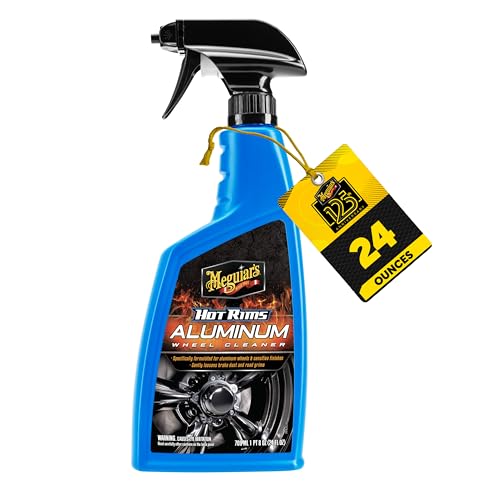
4. Meguiar’s Hot Rims Aluminum Wheel Cleaner
Best for: Drivers with sensitive aftermarket wheels
Meguiar’s Hot Rims Aluminum Wheel Cleaner comes in a 24-ounce spray bottle for removing brake dust and road grime. Its foaming gel clings to wheel surfaces instead of running off immediately, giving the formula more contact time in tight spokes, around lug holes, and near visible brake components. That makes it a practical choice for routine wheel care, especially when loose dirt has built up.
The main appeal is its focus on delicate finishes. The cleaner is designed for uncoated polished aluminum, anodized surfaces, and powder-coated wheels, which can require more care than standard painted rims. It aims to provide strong cleaning without relying on an overly harsh formula. At around $9, the bottle costs little to add to a car-care setup. Still, heavy or baked-on deposits may need agitation with a wheel brush after the cleaner works. Meguiar’s also points to 125 years in automotive care, dating back to 1901, though that history does not replace checking compatibility with your specific wheel finish.
Pros
- Foaming gel clings to spokes and recesses for longer contact time.
- Made for uncoated polished aluminum, anodized, and powder-coated finishes.
- Around $9 makes it an affordable dedicated wheel cleaner.
Cons
- The 24-ounce bottle may run out quickly on multiple vehicles or heavily soiled wheels.
- Stubborn, baked-on brake dust may still require a separate brush and extra effort.
3. Adam’s Polishes Wheel & Tire Cleaner

Best for: Deep-cleaning wheels before tire dressing
Adam’s Polishes Wheel & Tire Cleaner is a 16-ounce spray made for road grime, brake dust, tire browning, grease, wax buildup, polymers, and old tire dressing. Its alkaline solvents and surfactants create suds that loosen buildup on both wheels and tires. That makes it useful before applying fresh dressing, since leftover oils and product residue can affect how evenly the new layer adheres.
What genuinely sets it apart is its listed compatibility with several common wheel materials. Adam’s says it is safe for clear-coated, powder-coated, chrome, alloy, and painted wheels. The cleaner targets metallic brake contamination while also restoring the tire’s darker appearance. Around $12, the bottle offers a low entry price for occasional detailing. However, regular users may finish 16 ounces quickly. The brand also includes a 110% satisfaction guarantee, subject to its terms.
Pros
- Cleans brake dust, tire browning, grease, wax, and old dressing.
- Listed for clear-coated, powder-coated, chrome, alloy, and painted wheels.
- Prepares tires for more even dressing application.
Cons
- The 16-ounce bottle may not last through frequent vehicle cleaning.
- “Safe on many finishes” is not universal, so unfamiliar or damaged wheels still need a spot check.
2. P&S Professional Detail Products Brake Buster Wheel and Tire Cleaner

Best for: Detailers cleaning multiple vehicles
P&S Professional Detail Products Brake Buster is a non-acid wheel and tire cleaner sold in a 1-gallon container. It targets brake dust, road grime, oil, dirt, and light corrosion on chrome, aluminum, painted, powder-coated, and steel wheels. That broad material range makes it practical for vehicles with different wheel finishes. At around $37, it costs more upfront than a small consumer spray, but the gallon size suits frequent cleaning.
Use it full strength from the bottle, or dilute it in a foam sprayer. The formula creates thick foam that reaches spokes and other tight areas before rinsing. It also claims to leave a protective coating that helps repel new grime, brake dust, and oxidation. That may help wheels stay cleaner between washes, but it does not replace careful rinsing or regular maintenance. The main draw is flexibility. One cleaner can handle tire washing and heavier wheel contamination without acid-based chemistry.
Pros
- Non-acid formula suits chrome, aluminum, painted, powder-coated, and steel wheels.
- Thick foam can reach spokes and recessed wheel areas.
- One-gallon size works well for frequent vehicle cleaning.
Cons
- A foam sprayer is needed for the thickest application.
- The gallon container takes more storage space and costs more upfront than smaller bottles.
1. Chemical Guys Signature Series Wheel Cleaner Spray

Best for: Weekly wheel cleaning on mixed finishes
Chemical Guys Signature Series Wheel Cleaner is a 16-ounce spray made for routine wheel and brake-area cleaning. Its foaming formula targets brake dust, road grime, light debris, and oxidation on wheels, calipers, and nearby parts. The product costs around $11, though store prices can change. Foam clings to surfaces, giving the cleaner more dwell time before rinsing or brushing.
Its broad material coverage is the main advantage. The formula is intended for chrome, painted, powder-coated, anodized, clear-coated, and custom wheels. You can also use it on wheel barrels, center caps, lug nuts, and suspension components. It suits cars, trucks, SUVs, motorcycles, RVs, and off-road vehicles. That range makes it useful for weekly wheel care. Still, 16 ounces is a modest amount for frequent cleaning of multiple large vehicles, and stubborn buildup may need agitation instead of rinse-only cleaning.
Pros
- Works across chrome, painted, powder-coated, anodized, and clear-coated wheels.
- Foaming action clings to surfaces for more contact time.
- Covers wheel barrels, calipers, lug nuts, and suspension components.
Cons
- The 16-ounce bottle may run out quickly for multiple vehicles.
- Heavy or baked-on brake dust may require a brush and extra effort.
Buying Guide
The most important factor is a pH-neutral, acid-free formula. Powder-coated finishes can lose gloss or develop stains after contact with hydrofluoric acid, strong acids, or highly caustic cleaners.
- pH range and ingredients: Choose a product near pH 6 to 9. Avoid labels listing hydrofluoric acid, muriatic acid, or sodium hydroxide. The label should specifically mention powder-coated or painted wheels.
- Brake-dust performance: Look for surfactants or iron-removing ingredients that target metallic brake dust. A color-changing formula can help show where contamination remains, but it should still require agitation with a soft brush.
- Dwell time: Pick a cleaner with a 2- to 5-minute working time. Never let it dry on the wheel, especially in direct sun, and rinse one wheel at a time.
- Dilution and coverage: Ready-to-use bottles of 24 to 32 ounces suit occasional cleaning. Concentrates may offer better value when they make at least 1 gallon at a 1:5 to 1:10 dilution.
- Application and cost: A foaming trigger can improve coverage and reduce runoff. Compare the price per ready-to-use gallon, with $10 to $25 covering many household options.
If you cannot prioritize everything, choose finish-safe chemistry over fragrance, bottle size, or extra cleaning claims.
Frequently Asked Questions
How do you choose a cleaner for powder-coated wheels?
Choose a pH-neutral, non-acidic wheel cleaner labeled safe for powder-coated finishes. Check the instructions for dilution, dwell time, and compatibility before buying. A practical option should rinse clean without heavy brushing, and a two- to five-minute dwell time is common for routine brake-dust removal.
What makes a wheel cleaner safe for powder coating?
A powder-coating-safe cleaner uses mild surfactants instead of strong acids or caustic solvents. It should also provide clear surface warnings and rinsing directions. Look for pH information near neutral, roughly 6 to 8, and avoid formulas that require extended contact or use on hot wheels.
Can you use an iron-removing cleaner on powder-coated wheels?
Yes, you can use an iron-removing wheel cleaner on powder-coated wheels only when its label specifically approves that finish. Apply it to cool, shaded wheels, follow the stated dwell time, and rinse thoroughly. Many products recommend about two to five minutes, but never let the solution dry.
Are spray-on wheel cleaners better than soap for powder-coated wheels?
Spray-on wheel cleaners remove heavier brake dust faster than ordinary car soap, but they are not always better for regular washing. Use mild soap for weekly care and a dedicated cleaner for buildup. For example, a pH-neutral formula may need only two to three minutes before rinsing.
Conclusion
Chemical Guys Signature Series Wheel Cleaner Spray remains the top recommendation for drivers who want a straightforward option for routine care of powder-coated wheels, especially those who value a recognizable brand and simple spray-on use. If your priority is the gentlest possible formula, choose a non-acid, pH-balanced wheel cleaner instead, since it can suit owners who want to limit harsh chemicals and follow a cautious maintenance routine. Before buying, double-check the bottle size, wheel and finish compatibility, the number of bottles included, and the current price, since package quantities and retailer offers can change; confirm the label gives clear directions for your wheel material before placing the order.