
For most buyers, MAG 1 Pressure Washer Pump Oil is the top pick for the best oil for honda pressure washer because it is made specifically for pressure-washer pumps, not general engine lubrication. That focused purpose makes it a practical choice for compatible Honda-powered washers, where the pump and engine may require different oils. Check your owner’s manual before buying.
This guide is for homeowners who need replacement oil for routine maintenance, seasonal storage, or pump service. The key factors are the required viscosity, oil formula, and bottle capacity. Correct compatibility matters most, since using the wrong oil can shorten pump life or affect operation. The six picks below are ranked with clear reasons and honest drawbacks for each, so you can match the oil to your washer and maintenance routine.
Quick Comparison
| # | Product | Best For | Price | |
|---|---|---|---|---|
| 1 | MAG 1 Pressure Washer Pump Oil | Pressure washer pump maintenance | ~$16 | View → |
| 2 | Valley Industries Pressure Washer Engine Oil | Pressure washer engine servicing | ~$13 | View → |
| 3 | Valley Industries PK-85490000 Pump Oil | Replacement pump oil supply | ~$18 | View → |
| 4 | Honda 10W-30 Motor Oil 2-Pack | Two-bottle motor oil buyers | ~$23 | View → |
| 5 | Honda Pro Honda GN4 Motor Oil | GN4 motorcycle oil users | ~$37 | View → |
| 6 | Honda 08213-10W30 Oil | Honda 10W-30 oil shoppers | ~$11 | View → |
6 Top Honda Pressure Washer Oils
These engine oils are ranked by Honda compatibility, viscosity options, and owner needs, counting down to the top pick.
6. Honda 08213-10W30 Oil

Best for: Honda owners needing a small refill
The Honda 08213-10W30 Oil comes in a 12-ounce bottle and carries Honda’s genuine OEM labeling. Its 10W-30 grade makes it a targeted choice for equipment or engines that call for that viscosity. Before buying, check the owner’s manual for the correct oil type and required amount. A proper match matters more than the brand name alone.
The compact bottle suits small top-offs and maintenance jobs where a full quart would leave excess oil behind. It also provides a simple way to keep Honda-branded oil on hand without buying a larger container. At around $11, the cost is reasonable for a single-use refill, but the price per ounce is high compared with larger bottles. The main advantage is fit for Honda owners who want a genuine replacement product. The main drawback is limited volume. Twelve ounces may not cover a complete oil change, depending on the engine and its capacity.
Pros
- Genuine OEM Honda oil offers a brand-matched replacement option.
- The 12-ounce size works well for small refills and top-offs.
- The 10W-30 grade gives buyers a clearly labeled viscosity to compare with manual requirements.
Cons
- Twelve ounces may be insufficient for a full oil change.
- Around $11 makes this bottle expensive per ounce compared with larger containers.
5. Honda Pro Honda GN4 Motor Oil
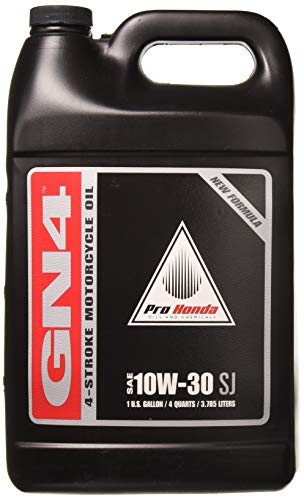
Best for: Honda motorcycle owners needing 10W-30 oil
Pro Honda GN4 is a 4-stroke motorcycle oil in a 1-gallon container. This 10W-30 formula comes from Honda and is sold here as a brand-new product from an authorized Honda dealer. The gallon size suits routine maintenance or multiple oil changes, depending on the motorcycle’s oil capacity and service schedule. At around $37, it costs more than many general-purpose motor oils, but it targets motorcycle engines rather than everyday car use.
Honda developed GN4 with selected base stocks and an additive package made for motorcycle engine demands. Its key benefits include resistance to shear, stable viscosity, and cleaner engine operation under normal riding stress. Those traits matter because motorcycle oil can face heat, high engine speeds, and shared-engine lubrication demands. Still, buyers should confirm the owner’s manual before ordering. Some motorcycles require a different viscosity or a specific oil certification. The 1-gallon jug also may be more oil than a single service needs.
Pros
- The 10W-30 viscosity fits Honda motorcycles that specify this grade.
- Shear-resistant oil helps maintain viscosity during engine operation.
- A 1-gallon container provides useful supply for regular maintenance.
Cons
- The 10W-30 grade is unsuitable for engines requiring another viscosity.
- A gallon jug may leave excess oil after one oil change.
4. Honda 10W-30 Motor Oil 2-Pack

Best for: Honda power equipment owners
Honda Motor Oil 10W30 comes as two 1-quart bottles, providing 2 quarts of oil for compatible Honda power equipment. The 10W-30 viscosity grade suits four-stroke engines that operate at high speeds. Honda designed this oil for its equipment, so check the owner’s manual before using it in a mower, tiller, generator, or other machine. The two-bottle pack costs around $23, though prices can change.
Its main strength is the additive package. Honda uses shear-stable polymers and quality base stocks to help the oil resist viscosity loss and thermal breakdown during engine operation. That protection can matter when equipment runs under heat and changing loads. The oil also meets API service classification SM requirements, and Honda lists it for its newer power equipment. Still, the bottle does not replace the manual’s guidance on oil grade, fill quantity, or change interval. This is a focused maintenance product, not a universal fluid for every engine or vehicle.
Pros
- Two 1-quart bottles provide 2 quarts for a scheduled oil change or top-off.
- Shear-stable polymer additives help the oil maintain viscosity under engine stress.
- Meets API SM requirements and is designed for Honda power equipment.
Cons
- The 10W-30 grade may not suit equipment that requires another viscosity.
- Two quarts may be more than needed for one machine, or not enough for several changes.
3. Valley Industries PK-85490000 Pump Oil

Best for: Gas pressure washer pump maintenance
Valley Industries Premium Pump Oil is a one-liter lubricant for pressure washer pumps. It is intended for gas pressure washers, giving owners a dedicated fluid for routine pump care instead of a general-purpose engine oil. The black bottle includes an easy-fill neck, which can make topping up less messy when the pump sits in a tight machine bay. At around $18, it is a reasonably priced maintenance supply, though pump oil becomes a recurring cost with regular equipment use.
Its non-detergent, non-foaming formula is the main reason to consider it. Detergents can add unwanted cleaning action, while excess foam may interfere with consistent lubrication inside the pump. Valley Industries rates this oil for rust and oxidation protection, useful when equipment faces moisture, storage, and repeated heat cycles. The one-liter size provides a practical supply for scheduled service, but the amount required varies by pump. Check the washer’s manual before filling, since oil requirements differ between models.
Pros
- Non-detergent formula suits pressure washer pump lubrication.
- Non-foaming design helps support consistent pump operation.
- One-liter bottle includes an easy-fill neck and rust protection.
Cons
- One liter may exceed the amount needed for a single service.
- Compatibility needs checking, especially for electric or specialty pressure washers.
2. Valley Industries Pressure Washer Engine Oil

Best for: 4-stroke pressure washer owners
Valley Industries Premium 4-Cycle Engine Oil is a one-liter bottle of SAE 10W-30 oil for gasoline-powered pressure washer engines. Its 4-stroke formula fits many common pressure washer designs, and the same oil may work in other gas-powered small engines. Check the engine manufacturer’s manual before filling, since oil requirements vary by model.
The easy-fill neck should help reduce spills around the crankcase opening. One liter gives enough oil for many routine changes, though the exact amount depends on the engine. At around $13, this bottle costs less than many specialty maintenance products. Its main advantage is simplicity: one familiar viscosity grade, a useful bottle size, and compatibility with more than pressure washers. Still, it is not a universal replacement for every small-engine oil. The manual should confirm both the SAE rating and required fill level.
Pros
- SAE 10W-30 viscosity suits many 4-stroke pressure washer engines.
- One-liter capacity provides oil for a routine service on many smaller engines.
- Easy-fill neck can make pouring cleaner and more controlled.
Cons
- The 10W-30 grade may not match every engine’s temperature or oil requirements.
- A one-liter bottle may be insufficient for larger engines or multiple oil changes.
1. MAG 1 Pressure Washer Pump Oil

Best for: routine pressure washer pump maintenance
MAG 1 Pressure Washer Pump Oil is a dedicated lubricant for pressure washer pumps in both gas-powered and electric machines. The quart bottle provides 32 fluid ounces for routine oil changes, seasonal servicing, or topping off a compatible pump. Around $16, it costs less than many larger maintenance purchases, but buyers should confirm their washer’s manual before use.
Its main advantage is targeted pump protection. The formula helps limit foaming and aeration, which can disrupt consistent lubrication during operation. It also helps protect internal parts from rust, oxidation, and corrosion. Friction and wear control may reduce stress on pump components during demanding cleaning jobs. The bottle size is convenient for storage, though one quart may exceed the amount needed for a single service. This oil is for pump maintenance, not for a pressure washer engine.
Pros
- Made for pump lubrication in gas and electric pressure washers.
- Helps resist foaming and aeration during pump operation.
- Helps reduce friction while protecting against rust, oxidation, and corrosion.
Cons
- Compatibility still depends on the pressure washer manufacturer’s specifications.
- A 32-ounce bottle may be more oil than one service requires.
Buying Guide
Engine compatibility matters most when choosing oil for a Honda-powered pressure washer. The wrong formula can increase wear, cause hard starting, or damage a four-stroke engine.
- Engine oil type: Choose four-stroke small-engine oil, not two-stroke fuel-mix oil. Most Honda pressure washer engines use SAE 10W-30, but the owner’s manual takes priority.
- Viscosity rating: Use SAE 10W-30 for temperatures above about 32°F (0°C). SAE 5W-30 can suit colder starts, while SAE 30 works in warmer conditions above roughly 50°F (10°C).
- API service rating: Select oil marked API SJ, SL, SM, SN, or SP, unless Honda specifies another grade. These ratings identify oil designed for modern gasoline engines.
- Operating climate: For seasonal use, match the oil to the lowest starting temperature. A 5W-30 full-synthetic formula offers easier cold starts below freezing, while conventional 10W-30 costs less for mild weather.
- Bottle size and changes: Buy a 1-quart bottle for many small engines, then confirm the exact capacity in the manual. Change engine oil after the first 5 hours, then about every 50 hours or once yearly.
If you cannot optimize every factor, prioritize the viscosity and service rating listed in the Honda manual.
Frequently Asked Questions
How do I choose oil for a Honda pressure washer?
Use SAE 10W-30 detergent oil for most Honda-powered pressure washers, unless the engine manual specifies another grade. This viscosity works across common outdoor temperatures and suits many GX-series engines. Check the engine model and oil-fill cap first, because some units call for SAE 30 in warmer conditions.
What oil does a Honda pressure washer engine need?
The engine needs four-stroke automotive detergent oil, while the pump needs its own pump oil if the manufacturer lists a separate fill point. Do not pour pump oil into the engine. A common engine choice is 10W-30, but the washer’s manual controls the correct product and capacity.
Can I use synthetic oil in a Honda pressure washer?
Yes, synthetic 10W-30 can be used in many Honda pressure-washer engines when the manual permits 10W-30 oil. It offers better low-temperature flow, but it does not replace regular changes. Change the crankcase oil after the first 5 hours on many new engines, then follow Honda’s schedule.
Are non-detergent oils suitable for Honda pressure washers?
No, non-detergent oil is generally not the right choice for a Honda pressure-washer engine; use a four-stroke detergent oil in the grade Honda recommends. Detergent oil helps carry contaminants to the drain during service. For many models, 10W-30 is the everyday option, but verify the owner’s manual.
Conclusion
MAG 1 Pressure Washer Pump Oil is the top pick for Honda pressure washer owners who want a purpose-made lubricant for routine pump maintenance. If your priority is saving money per ounce, choose a larger bottle or multipack instead, as long as its label confirms pressure-washer pump compatibility. Before buying, double-check the bottle size, Honda and pump compatibility, oil quantity required for your model, and the current price. A small container may suit occasional cleaning, while frequent users may prefer extra oil on hand. Follow the pressure washer manual for the correct fill amount and change interval. The right pump oil can help prevent avoidable maintenance issues, but it cannot correct worn seals, damaged pumps, or other mechanical problems.