
MagicFiber Microfiber Cleaning Cloth is the top pick for most buyers, making it the best microfiber cloth for glasses because its soft fibers remove fingerprints and smudges without leaving lint behind. It is a simple, reusable lens cloth for eyeglasses, sunglasses, camera lenses, and phone screens. The compact design also fits easily in a glasses case, desk drawer, or travel pouch.
This guide is for anyone who wants clearer lenses without paper towels, tissues, or sprays. The key factors are the cloth’s microfiber quality, size, and ability to wash clean without becoming rough. A cloth should pick up skin oil and dust while staying gentle on coated lenses. The five picks below are ranked by practical value, with clear reasons and honest drawbacks for each. That makes it easier to choose a suitable cleaning cloth for daily use, travel, or occasional lens care.
Quick Comparison
| # | Product | Best For | Price | |
|---|---|---|---|---|
| 1 | MagicFiber Microfiber Cleaning Cloth | Best for daily screen care | ~$10 | View → |
| 2 | Koala Lens Cleaning Cloth, Pack of 6 | Best for multi-device households | ~$10 | View → |
| 3 | MagicFiber Microfiber Cleaning Cloth | Best for camera lens owners | ~$7 | View → |
| 4 | 12-Pack Microfiber Lens Cleaning Cloths | Best for stocking up | ~$6 | View → |
| 5 | Puomue Microfiber Glass Cleaning Cloth, 6-Pack | Best for eyeglass wearers | ~$8 | View → |
5 Microfiber Cloths Worth Buying
This ranked list counts down from fifth place to the top pick, with each cloth judged for lens safety, cleaning ability, and value.
5. Puomue Microfiber Glass Cleaning Cloth, 6-Pack
Best for: Streak-free household glass cleaning
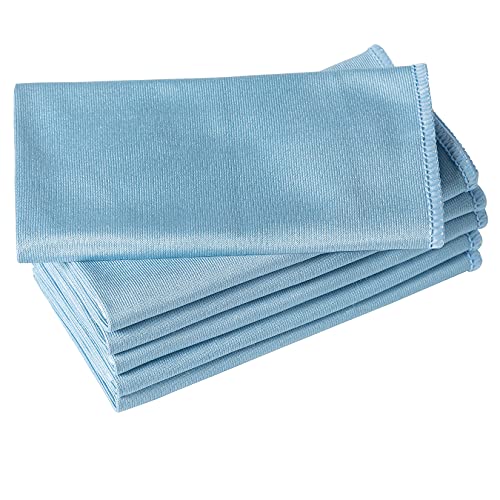
The Puomue set includes six blue microfiber cloths, each measuring 16 by 16 inches. Their 320 GSM fabric is thicker than many lightweight dusting cloths, giving each towel enough material for windows, mirrors, screens, eyeglasses, windshields, and stainless steel. The soft surface is intended to pick up dust and residue without leaving lint behind.
The main appeal is quantity. Six reusable cloths let you keep separate towels for the kitchen, bathroom, car, and delicate screens. Microfiber absorbs water well and dries faster than many cotton rags, which helps when wiping broad glass surfaces. These towels are machine washable, and the care instructions say to avoid bleach. The maker says they can be reused hundreds of times, but actual lifespan will depend on washing habits and the cleaners used. At around $8, the set offers an inexpensive way to replace disposable paper towels for routine wipe-downs.
Pros
- Six 16-by-16-inch cloths cover several rooms or vehicles.
- 320 GSM microfiber provides a thicker, absorbent cleaning surface.
- Machine-washable design supports repeated use and reduces paper towel waste.
Cons
- The blue fabric may show white residue or pale cleaning streaks.
- Thick microfiber can take longer to dry if heavily saturated, despite its quick-drying design.
4. 12-Pack Microfiber Lens Cleaning Cloths

Best for: People cleaning glasses and small screens
This 12-pack includes 7×6-inch microfiber cloths for eyeglasses, phones, tablets, monitors, and camera lenses. The soft woven material lifts fingerprints, skin oil, dust, and light smudges without needing much pressure. It is designed for coated, polarized, and blue-light lenses, so one pack can cover several types of optics. At around $6, the set costs little to keep in multiple rooms, bags, or vehicles.
Six colors make sorting simple, with two cloths in each color. You could assign one shade to glasses, another to screens, and a third to camera gear. Each cloth arrives in its own PE sleeve, which keeps unused pieces clean inside a drawer or eyeglass case. After use, the cloths can be washed and reused hundreds of times, provided they are laundered properly and kept free of grit. The compact size works well for glasses and small devices, but it may require several passes on a large monitor or tablet.
Pros
- Twelve cloths provide extras for home, work, travel, or family members.
- Six color options help separate cloths by device or cleaning task.
- Washable microfiber can reduce the need for disposable lens wipes.
Cons
- The 7×6-inch format is small for large screens and may take longer to use.
- Individual plastic sleeves create extra packaging waste and must be discarded.
3. MagicFiber Microfiber Cleaning Cloth

Best for: Everyday glasses and screen cleaning
The MagicFiber Microfiber Cleaning Cloth 2pk includes one black and one gray cloth, each measuring 6 by 7 inches. Made from microfiber, these reusable cloths are designed to lift dust, skin oil, fingerprints, and dirt from glasses and other smooth surfaces. Each cloth comes in its own polybag, which helps keep it clean before use. At around $7, the pair is an affordable option for a desk, car, nightstand, or travel bag.
The cloths can clean eyeglass lenses, phone screens, tablets, laptops, TVs, cameras, mirrors, and other delicate surfaces. Their lint-free design aims to leave fewer fibers, streaks, and marks than ordinary paper towels or cotton fabric. The two-color set also makes it easy to assign one cloth to glasses and the other to electronics. Still, cleaning results depend on the surface and how much grit is present. Wiping a dusty lens without first removing loose particles can cause scratches, even with a soft cloth.
Pros
- Two 6-by-7-inch cloths cover glasses, phones, tablets, and other screens.
- Microfiber picks up fingerprints, oil, dust, and everyday dirt.
- Individual polybags help protect each cloth from dust before use.
Cons
- The compact size may feel limiting for large TVs, mirrors, or car windows.
- Heavy grime or loose grit may require rinsing or pre-cleaning before wiping.
2. Koala Lens Cleaning Cloth, Pack of 6
Best for: People cleaning glasses and screens
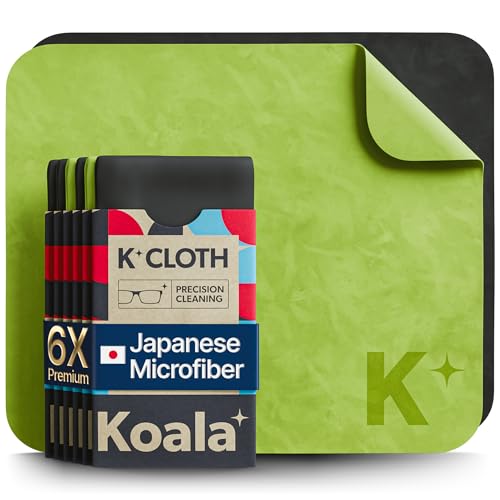
The Koala Lens Cleaning Cloth pack includes six reusable microfiber cloths in black and green. They use a dense Japanese-woven fabric with a honeycomb-style texture, designed to lift fingerprints, oils, dust, and everyday grime from smooth surfaces. The cloths are made for eyeglasses, sunglasses, camera lenses, touch screens, binoculars, telescopes, and AR or VR headsets. At around $10, the six-pack offers an inexpensive way to keep separate cloths in a bag, car, desk, and camera case.
What stands out is the broad surface compatibility. The cloth is intended for coated lenses, including anti-reflective, anti-glare, and polarized surfaces, without relying on disposable wipes. Koala says each cloth can be washed and reused dozens of times. Care is simple but hands-on: wash with cold water and mild soap, then hang it to air dry. The dense weave may help trap oils better than a thin basic cloth, though cleaning performance still depends on the amount of grit and residue on the lens.
Pros
- Six cloths provide convenient spares for multiple devices and locations.
- Japanese microfiber is designed to remove fingerprints, oil, dust, and grime.
- Washable construction can reduce ongoing spending on disposable wipes.
Cons
- The product listing does not provide the cloth dimensions.
- Hand washing and air drying take more effort than using disposable lens wipes.
1. MagicFiber Microfiber Cleaning Cloth

Best for: People cleaning glasses and screens
MagicFiber includes six microfiber cloths, with five black and one gray. Each measures 6 by 7 inches, or 15 by 18 cm, which is large enough for glasses, phones, cameras, and other small surfaces. Each cloth arrives in its own plastic bag, helping keep dust and lint away before use.
The microfiber material is designed to lift dust, skin oil, fingerprints, and everyday smudges. It should leave less lint and streaking than paper towels or ordinary fabric when used on a clean surface. One cloth can handle eyeglasses, laptop and tablet screens, LCD or OLED panels, mirrors, lenses, and car glass. The six-pack works well for keeping separate cloths at home, work, and in a vehicle. At around $10, the cost stays low per cloth. These are reusable tools, not pre-moistened disposable wipes, so heavy grime may still need a cleaning solution.
Pros
- Six cloths provide useful spares for different locations.
- Separate plastic bags help keep unused cloths clean.
- Microfiber suits glasses, screens, lenses, mirrors, and car glass.
Cons
- The 6-by-7-inch size may feel small for large televisions.
- Cloths alone may struggle with dried-on grease or heavy dirt.
Buying Guide
The most important factor is a lint-free, non-abrasive weave. Glasses collect fine dust, and a rough or shedding cloth can leave marks or push grit across the lenses.
- Material blend: Look for microfiber made with about 70–80% polyester and 20–30% polyamide. The tighter fibers pick up oil without needing much pressure.
- Cloth size: Choose a square measuring 6–8 inches per side. It fits most eyeglass cases while giving you enough surface area for both lenses and the frame.
- Lint control: Favor cloths labeled lint-free and designed for optical lenses. Avoid fuzzy terry textures, loose stitching, and printed graphics that can leave residue.
- Washability: Select a reusable option that tolerates at least 50 machine washes. Wash it without fabric softener, bleach, or towels, since those can transfer residue.
- Pack count and price: A two- to six-pack usually offers better value than a single cloth. A reasonable price range is about $5–$15, depending on size and packaging.
If you can prioritize only one factor, choose the softest lint-free weave made specifically for coated lenses.
Frequently Asked Questions
How do I choose a microfiber cloth for glasses?
Choose a glasses cloth made from tightly woven microfiber, with a smooth, lint-free surface and no abrasive trim. Look for a washable option sized around 6 by 7 inches, large enough to fold over both lenses without touching the fabric’s dirty side.
What makes microfiber cloths safe for eyeglasses?
A microfiber cloth is safe for eyeglasses when its fine fibers lift dust and oil without scratching lens coatings. Choose one labeled lint-free and avoid rough edges, stitched seams, or printed designs that can drag across the glass. Most useful cloths measure about 6 to 8 inches square.
Can I wash a glasses-cleaning cloth?
Yes, you can wash a glasses-cleaning cloth, and regular washing helps remove oil and grit that could scratch lenses. Use cool or warm water with a small amount of mild detergent, then air-dry it instead of using fabric softener. Wash it after several uses, or sooner if it picks up visible dust.
Are reusable microfiber cloths better than disposable wipes?
Yes, reusable lens cloths are usually better value than disposable wipes because one cloth can last through many washes. Pick a two- or three-pack so one can be clean while another is in use, and replace any cloth that feels gritty. A 6-by-7-inch cloth fits most glasses cases, while larger 12-by-12-inch versions suit sunglasses and bigger lenses.
Conclusion
MagicFiber Microfiber Cleaning Cloth is the top recommendation for glasses wearers who want a compact, reusable wipe for fingerprints, dust, and light smudges. If your priority is keeping cloths in several bags, cars, or desk drawers, choose a larger multi-pack instead, since extra pieces reduce the need to wash and replace one cloth often. Before buying, double-check the cloth size, its compatibility with coated lenses and other delicate surfaces, the quantity in the package, and the current price, because listings can change and a low unit price may only apply to a larger bundle. Store the cloth in a clean pouch, and wash it as directed to limit grit that could scratch lenses.