
For shoppers comparing the best homemade leather conditioner, Bick 4 Leather Conditioner & Cleaner is the top pick for most buyers because its two-in-one formula cleans and conditions without leaving a heavy residue. It suits common smooth leather items, including boots, bags, jackets, and furniture.
This guide is for anyone caring for leather at home, from occasional users to people maintaining several pieces each season. The main factors are leather compatibility, bottle size, coverage, and how much product each application requires. A conditioner that works on smooth leather may not suit suede, nubuck, or unfinished hides. The 7 picks below are ranked with clear reasons and honest drawbacks for each, so you can choose a practical match for your materials, cleaning routine, and budget.
Quick Comparison
| # | Product | Best For | Price | |
|---|---|---|---|---|
| 1 | Bick 4 Leather Conditioner & Cleaner | Vintage leather owners | ~$10 | View → |
| 2 | Leather Honey Leather Conditioner | Dry, cracked leather restoration | ~$20 | View → |
| 3 | Weiman Leather Cleaner, Conditioner & Protector | Furniture maintenance shoppers | ~$9 | View → |
| 4 | Leather Honey Complete Leather Care Kit | Complete leather-care kit buyers | ~$44 | View → |
| 5 | Bick 4 Leather Conditioner & Cleaner | Horse tack conditioners | ~$9 | View → |
| 6 | Bick 4 Leather Conditioner & Cleaner | Leather shoe care beginners | ~$17 | View → |
| 7 | Leather CPR Cleaner and Conditioner | Quick one-step leather cleaning | ~$27 | View → |
7 Homemade Leather Conditioners Worth Trying
This ranked list counts down from practical homemade leather treatments to the top pick, with ingredients, uses, and limitations clearly compared.
7. Leather CPR Cleaner and Conditioner

Best for: finished-leather furniture and car interiors
Leather CPR is a water-based cleaner and conditioner for finished real leather. The 18-ounce bottle is designed to lift dirt, body oils, and grime while adding moisture in one step. It suits sofas, recliners, ottomans, office chairs, car seats, steering wheels, jackets, handbags, boots, saddles, and wallets. At around $27, it costs more than a basic leather wipe but combines two routine steps.
Its main advantage is the simple process. Apply it with a spray or clean cloth, spread it across the surface, and let it dry. There is no rinsing or buffing. The brand says a full leather couch takes about 15 minutes, then dries to a natural matte finish rather than a plastic-looking shine. The pH-balanced formula is labeled non-toxic and aims to restore softness, color depth, and a less dry feel without a greasy film. Results can vary by leather condition, so a hidden-spot test still makes sense.
Pros
- Cleans and conditions with one product.
- Works across furniture, car interiors, clothing, boots, and bags.
- Requires no rinsing or buffing after application.
Cons
- Not suitable for suede or nubuck materials.
- An 18-ounce bottle may not cover several large leather pieces at once.
6. Bick 4 Leather Conditioner & Cleaner

Best for: Smooth leather boots, bags, and furniture
Bick 4 is a wax-free leather cleaner and conditioner for smooth, finished leather. The 16-ounce bottle can cover several pairs of boots, handbags, or furniture pieces, depending on how much product each surface needs. Its one-step formula aims to clean light grime, refresh the finish, and keep leather supple without leaving a sticky or gummy coating. At around $17, it costs less than many specialty leather-care kits.
The main draw is its clear finish. Bick 4 is designed not to darken leather, making it useful for lighter boots, bags, and couches where color changes are easy to spot. It can also bring back some surface shine on older leather, but it will not repair deep cracks, peeling finish, or major scratches. The conditioner is made in the United States, and the brand has produced leather-care products since 1882. It works across common smooth leather goods, including shoes, furniture, clothing, equestrian gear, and some exotic leather items.
Pros
- Wax-free formula leaves no gummy or sticky residue.
- Designed to condition without darkening leather.
- 16-ounce size suits regular care for multiple items.
Cons
- Not intended for suede, nubuck, or other unfinished leather.
- It cannot fix severe cracking, peeling, or structural leather damage.
5. Bick 4 Leather Conditioner & Cleaner
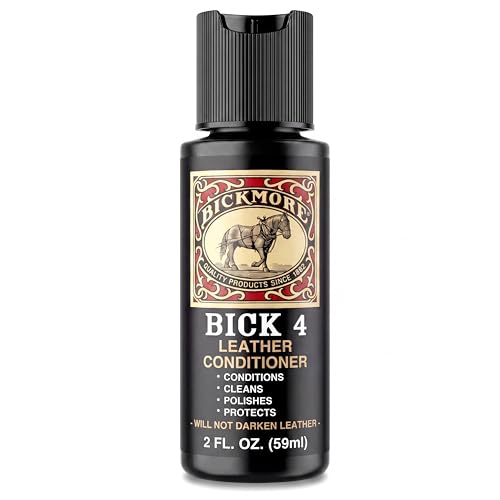
Best for: Smooth leather boots and small bags
Bick 4 is a 2-ounce leather cleaner and conditioner for boots, shoes, jackets, handbags, furniture, car interiors, motorcycle seats, saddles, and other leather goods. The formula is made in the United States, and the brand has produced leather-care products since 1882. At around $9, this small bottle offers an affordable way to maintain a few everyday items.
Its biggest advantage is the clear finish. The conditioner is designed not to darken leather, which helps preserve the original color of newer boots or bags. It is also wax-free, so it should not leave a sticky coating or seal the leather’s pores. The one-step application keeps routine care simple. Still, buyers should match it to the item first. The product is mainly suited to smooth, finished leather, even though the brand lists many leather types and uses. A small hidden-area test remains sensible, especially on older, dyed, or exotic materials.
Pros
- Helps condition and clean leather without intentionally changing its shade.
- Wax-free formula avoids a gummy residue and supports leather breathability.
- Works across boots, bags, upholstery, vehicle interiors, and equestrian gear.
Cons
- The 2-ounce bottle may run out quickly when treating furniture, car interiors, or several pairs of boots.
- It is not a dedicated waterproofing product, so users needing rain protection may need a separate treatment.
4. Leather Honey Complete Leather Care Kit

Best for: Routine care for smooth leather
Leather Honey Complete Leather Care Kit pairs a fragrance-free cleaner with a deep-penetrating conditioner for common leather goods. It is made in the USA, with formulas produced since 1968. The conditioner contains no silicone, solvents, or animal products, while the cleaner carries EAP Safer Choice certification. That combination suits shoppers who want simpler ingredients for leather furniture, car seats, boots, shoes, belts, purses, saddles, and tack.
The formulas work across leather colors, including white, and are made without PFAS chemicals. The conditioner is intended for both newer material and dry, aging surfaces, so one kit can cover regular upkeep and basic restoration. At around $44, it costs more than a single bottle of leather cleaner, but the two-product setup may be useful for households with several leather items. The main restriction is material type. These products are not designed for suede, so buyers with mixed leather collections should check each item before applying them.
Pros
- Fragrance-free cleaner suits people who dislike strong product odors.
- Conditioner contains no silicone, solvents, or animal products.
- Works on leather furniture, vehicle seats, footwear, bags, and tack.
Cons
- Not suitable for suede, which limits its use across mixed-material collections.
- Around $44, it costs more than a basic cleaner or conditioner alone.
3. Weiman Leather Cleaner, Conditioner & Protector

Best for: Finished leather car seats and furniture
Weiman Leather Cleaner, Conditioner & Protector combines three jobs in one trigger-spray bottle. It lifts dirt, body oils, grime, and residue from finished leather, then conditions the surface to help it stay soft. The formula contains six natural oils, while UVX-15 sunscreen helps reduce fading, drying, discoloration, and cracking from sunlight. It costs around $9, though store prices can change.
The spray works on finished leather in cars, sofas, recliners, office chairs, jackets, handbags, boots, shoes, saddles, and tack. It can also treat faux leather, which broadens its use around a home or vehicle. The main draw is convenience: one product cleans and conditions without leaving a greasy film. Still, “finished leather” matters. Buyers should check the care label and test an unseen area first, especially on dyed or older material. This is routine maintenance, not a repair product for deep cracks, peeling coatings, or badly dried leather.
Pros
- Six natural oils help soften and condition finished leather.
- UVX-15 sunscreen helps limit sun-related fading and cracking.
- Trigger spray applies quickly and should not leave greasy residue.
Cons
- It is not suitable for unfinished or suede leather.
- It cannot repair deep cracks, peeling finishes, or severe leather damage.
2. Leather Honey Leather Conditioner

Best for: Conditioning genuine leather furniture
Leather Honey is a cream-style conditioner for genuine leather. It works on furniture, car seats, shoes, belts, purses, boots, saddles, and tack. The formula suits all leather colors, including white, and the company says one application can last at least six months. That longer treatment cycle may appeal to owners who want less frequent upkeep.
What sets it apart is its ingredient profile. The conditioner contains no silicone, solvents, animal products, or PFAS chemicals. It is pH balanced, fragrance-free, non-sticky, and water-repellent, so it can help leather handle rain and snow. The product is made in the United States, with the brand producing leather-care products since 1968. At around $20, it costs more than basic leather wipes but remains affordable for maintaining higher-priced furniture, boots, or car interiors. It cannot be used on every leather-like material, though, and buyers should check the surface before applying it.
Pros
- One application is designed to last at least six months.
- Works on many genuine leather items and colors, including white leather.
- Fragrance-free formula contains no silicone, solvents, animal products, or PFAS.
Cons
- Not suitable for suede, faux leather, or vinyl.
- Around $20 may cost more than simple wipes or budget conditioners.
1. Bick 4 Leather Conditioner & Cleaner

Best for: Keeping smooth leather in its original shade
Bick 4 is an 8-ounce leather cleaner and conditioner for boots, shoes, jackets, bags, furniture, car interiors, motorcycle seats, and saddles. Its water-based formula is made for smooth and finished leather, including some exotic leathers. The product has been made in the United States since 1882 and usually costs around $10.
What sets it apart is its wax-free formula. It should not leave a sticky coating or block the leather’s pores, so treated items can remain soft and breathable. Bickmore also states that it will not darken leather, which makes it useful for light-colored boots, handbags, and couches. The one-step application keeps routine care simple. Still, test it on a hidden area first, since leather finishes can react differently. This is a conditioner and cleaner, not a dedicated waterproofing treatment.
Pros
- 8-ounce bottle handles boots, bags, upholstery, and other leather items.
- Wax-free formula avoids gummy residue and heavy surface buildup.
- Designed to maintain leather’s existing color instead of darkening it.
Cons
- It is not a substitute for a waterproofing product in wet conditions.
- Results can vary by finish, dye, and leather type, so spot testing is necessary.
Buying Guide
The most important factor is compatibility with the leather, because the wrong oil can darken, stiffen, or damage the surface. Choose a homemade leather treatment based on the item’s finish and leather type.
- Leather type: Use a recipe labeled for finished smooth leather, suede, nubuck, or unfinished leather. Suede and nubuck usually need a dry brush, not oil.
- Ingredient safety: Prefer simple formulas with beeswax and a stable oil, such as jojoba. Avoid olive, coconut, and vegetable oils, which can spoil or leave a sticky film.
- Mixing ratio: Start with 1 part beeswax to 4 parts oil for a firm balm. Use 1 part beeswax to 8 parts oil for softer leather.
- Patch testing: Apply a pea-sized amount to a hidden 1-inch area. Wait 24 hours, then check for darkening, tackiness, cracking, or color transfer.
- Storage and shelf life: Store the mixture in a sealed 2- to 4-ounce jar away from heat and sunlight. Discard it if the smell changes or the texture turns grainy.
If you cannot satisfy every requirement, prioritize leather compatibility and the 24-hour patch test.
Frequently Asked Questions
How do you make homemade leather conditioner?
Make a simple leather conditioner by mixing one part beeswax with two parts refined jojoba oil, then melt the blend gently and let it cool before use. Apply a very thin coat to clean leather, wait 10 minutes, and buff away residue. Test a hidden spot first because oils can darken some hides.
What household oils are safe for leather conditioning?
Most household cooking oils are not reliably safe for leather, so use a conditioner made for the specific hide instead. Olive, coconut, and vegetable oils can leave a greasy film, attract dust, or turn rancid. If you still test one, use a drop on an unseen area and check it after 24 hours.
Can you use beeswax as leather conditioner?
Yes, beeswax can condition and protect smooth leather, but it should be melted into a softer oil and applied in a very thin layer. Use about one teaspoon of finished balm per square foot, then buff after 10 minutes. Avoid beeswax on suede, nubuck, or unfinished leather because it can clog the nap.
Are homemade leather conditioners good for every type of leather?
No, homemade leather conditioners are not suitable for every leather type, especially suede, nubuck, patent leather, and unfinished hides. Smooth, finished leather is the easiest match, but patch-test any mixture first and wait 24 hours. Follow the item maker’s care instructions when available, since some finishes react badly to oils or waxes.
Conclusion
Bick 4 Leather Conditioner & Cleaner is the top recommendation for leather owners who want one ready-made product to clean and condition smooth leather, especially bags, boots, jackets, or furniture needing routine care without a heavy, greasy feel. If your priority is lower cost or control over ingredients, choose a matched DIY formula instead, but confirm that its oils and waxes suit the leather, finish, and item before applying it. Before buying, double-check the size, leather compatibility, total quantity, and current price, since one small bottle may not cover boots, multiple bags, or a sofa, while a larger package offers better value only when you can use it before it dries out.